Frank Stella: a retrospective
de Young Museum, San Francisco
Overview
ROLE
Lead Exhibition Designer
VENUE
de Young Museum, Herbst Galleries
DURATION
Nov 2016 – Feb 2017
TOOLS
Illustrator, InDesign, Photoshop
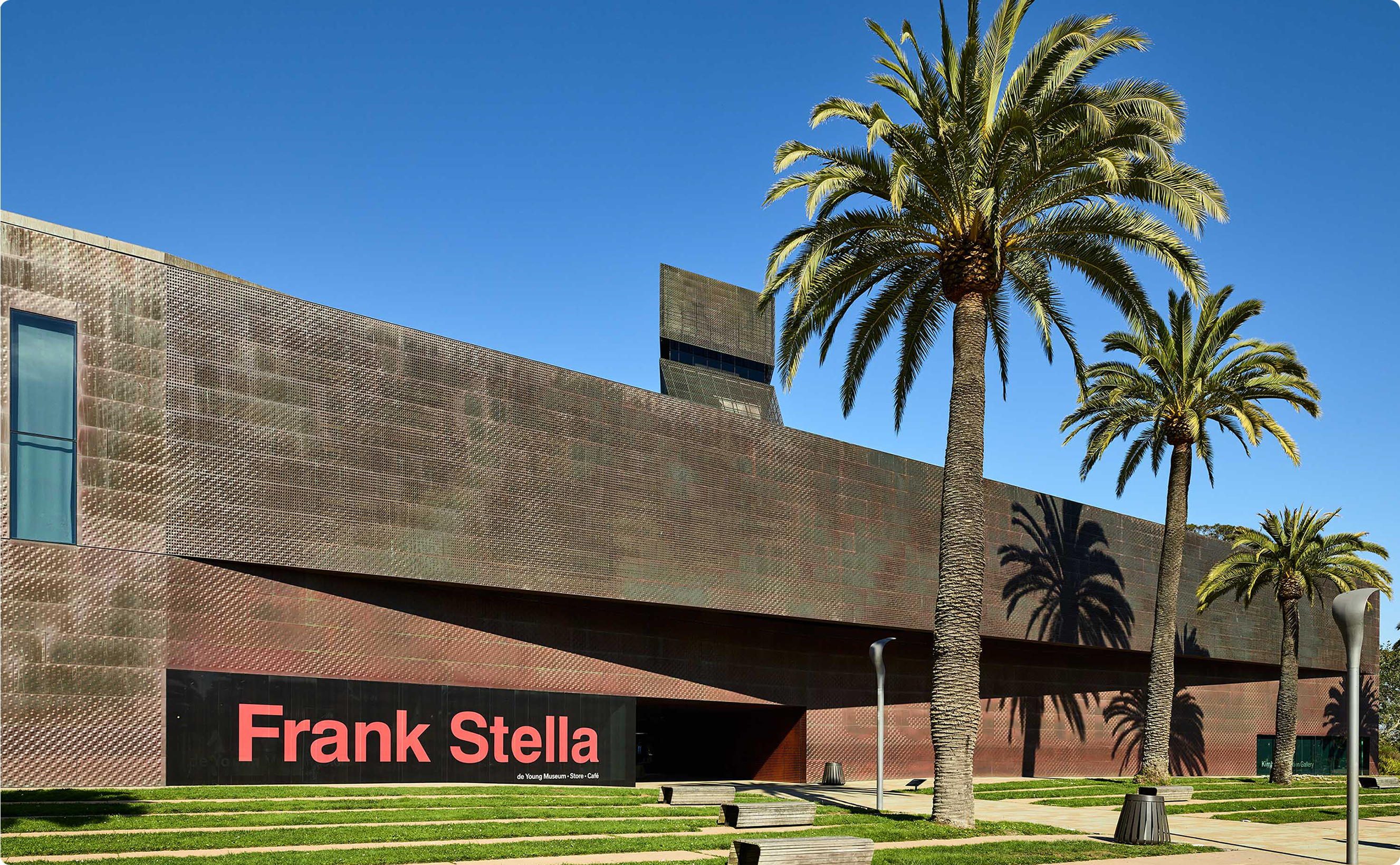
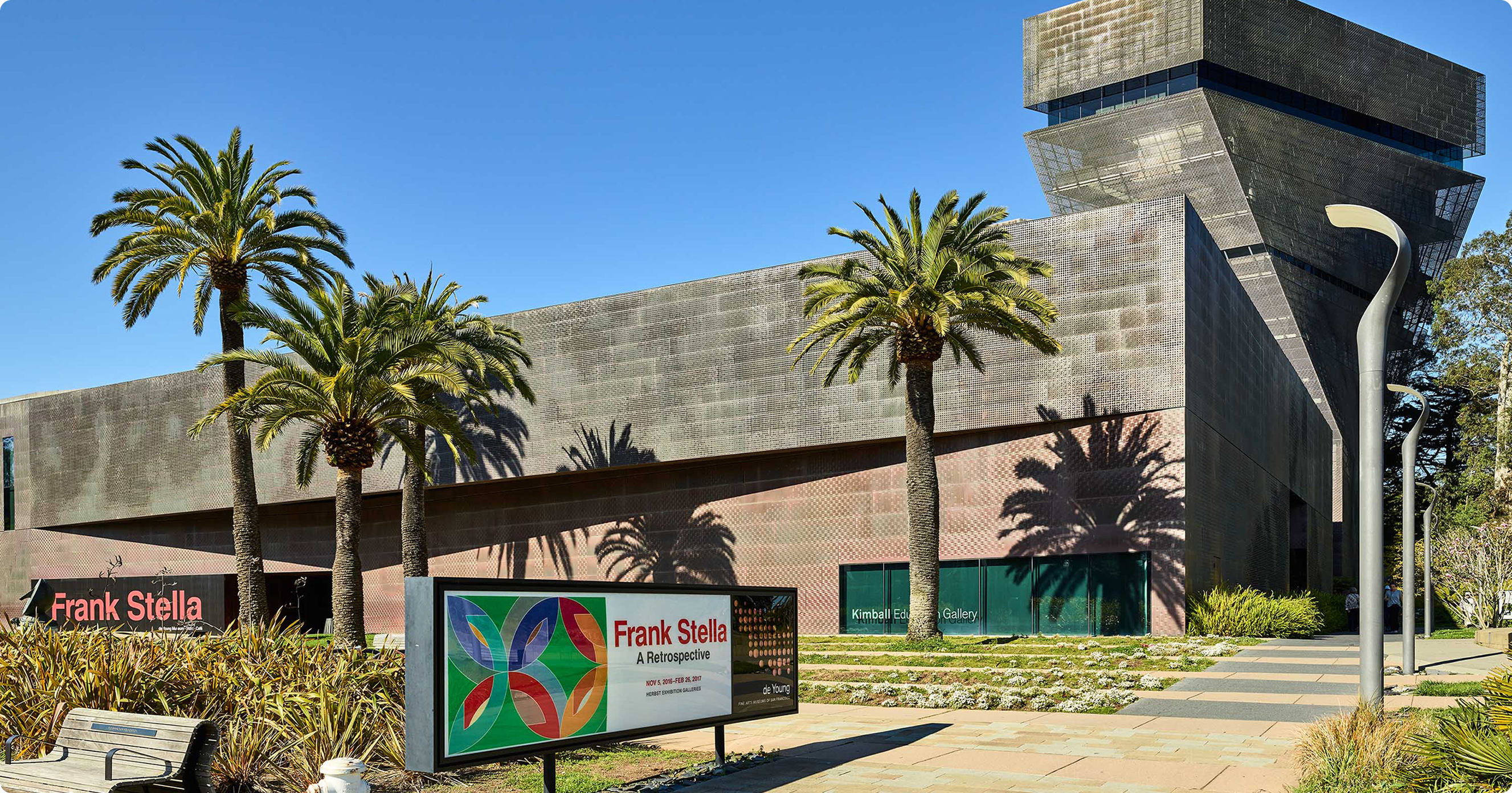
Frank Stella: A Retrospective brought one of the most important figures in modern art to the de Young's Herbst Exhibition Galleries – a sprawling survey of nearly sixty years of work, from the stark Black Paintings of the late 1950s to the explosively colorful, three-dimensional canvases of his later career. Organized by the Whitney Museum of American Art and the Modern Art Museum of Fort Worth, the exhibition arrived at the de Young with institutional weight and a demanding brief. As lead exhibition designer, I built a completely independent visual system for the de Young's presentation – developing every designed surface from the ground up, from wall text and environmental vinyls to a full marketing suite and an expanded gift shop line.
Research and Discovery
Understanding an artist who never stopped reinventing the picture plane.
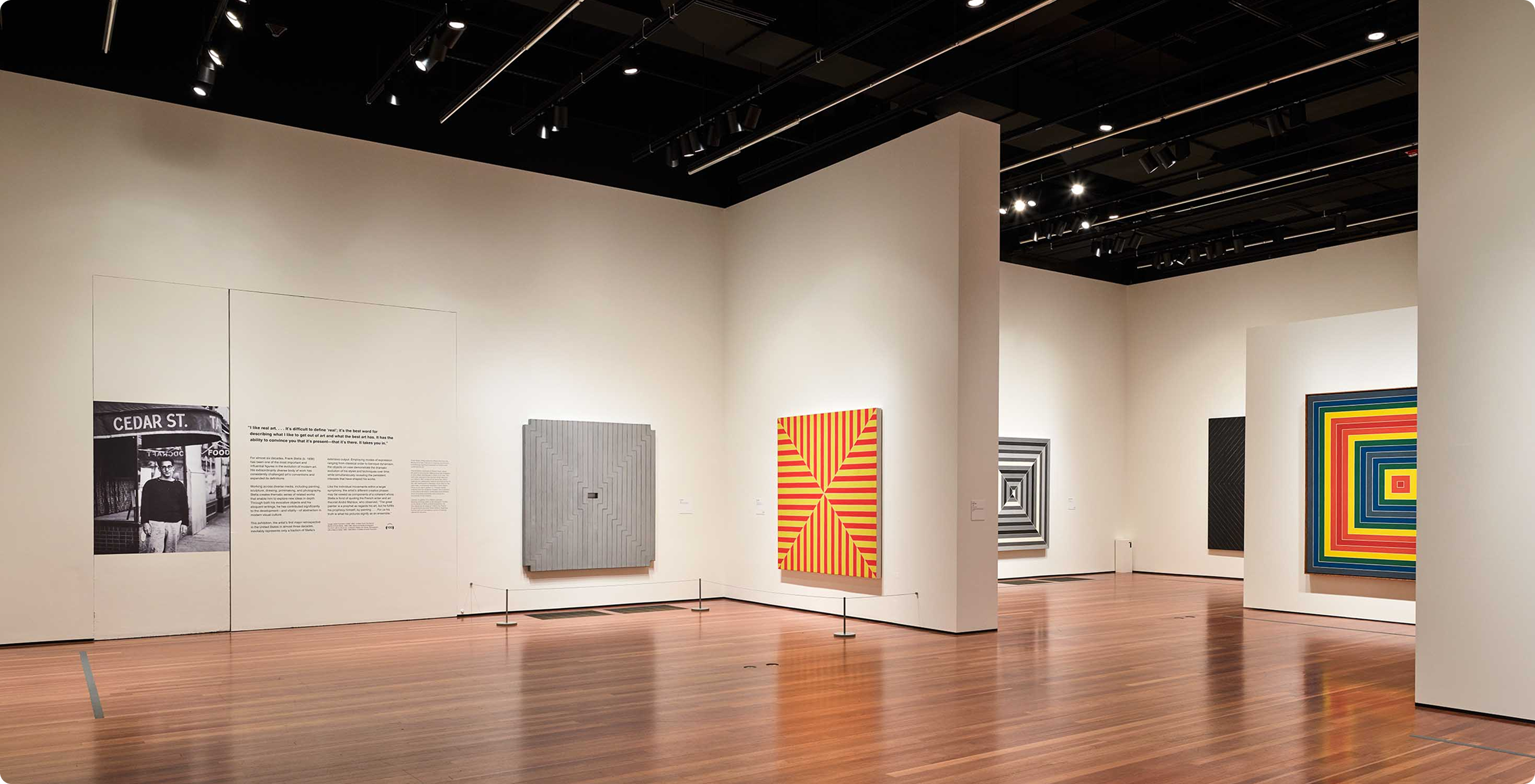
Stella's work resists easy categorization. His career spans minimalism, abstraction, geometric painting, shaped canvases, and large-scale three-dimensional reliefs – each phase a deliberate challenge to what a painting could be. Before any design decisions were made, I studied the full arc of his output to understand how the work evolved and how the exhibition's curatorial narrative moved through it.
The central interpretive thesis – Stella's lifelong engagement with pictorial space, and how paint could simultaneously lie flat and seem to expand into the room – shaped how I thought about the visual system. The exhibition wasn't just about objects on walls. It was about how color, geometry, and volume could redefine the experience of being in a room. That demanded a design response with the same energy.
Design constraint
The exhibition was organized by the Whitney and the Modern Art Museum of Fort Worth, but the de Young presentation required a fully original visual identity. I built the system independently with nothing inherited from prior venues.
Challenge and Solution
Building a bold, geometric, intensely chromatic visual language.
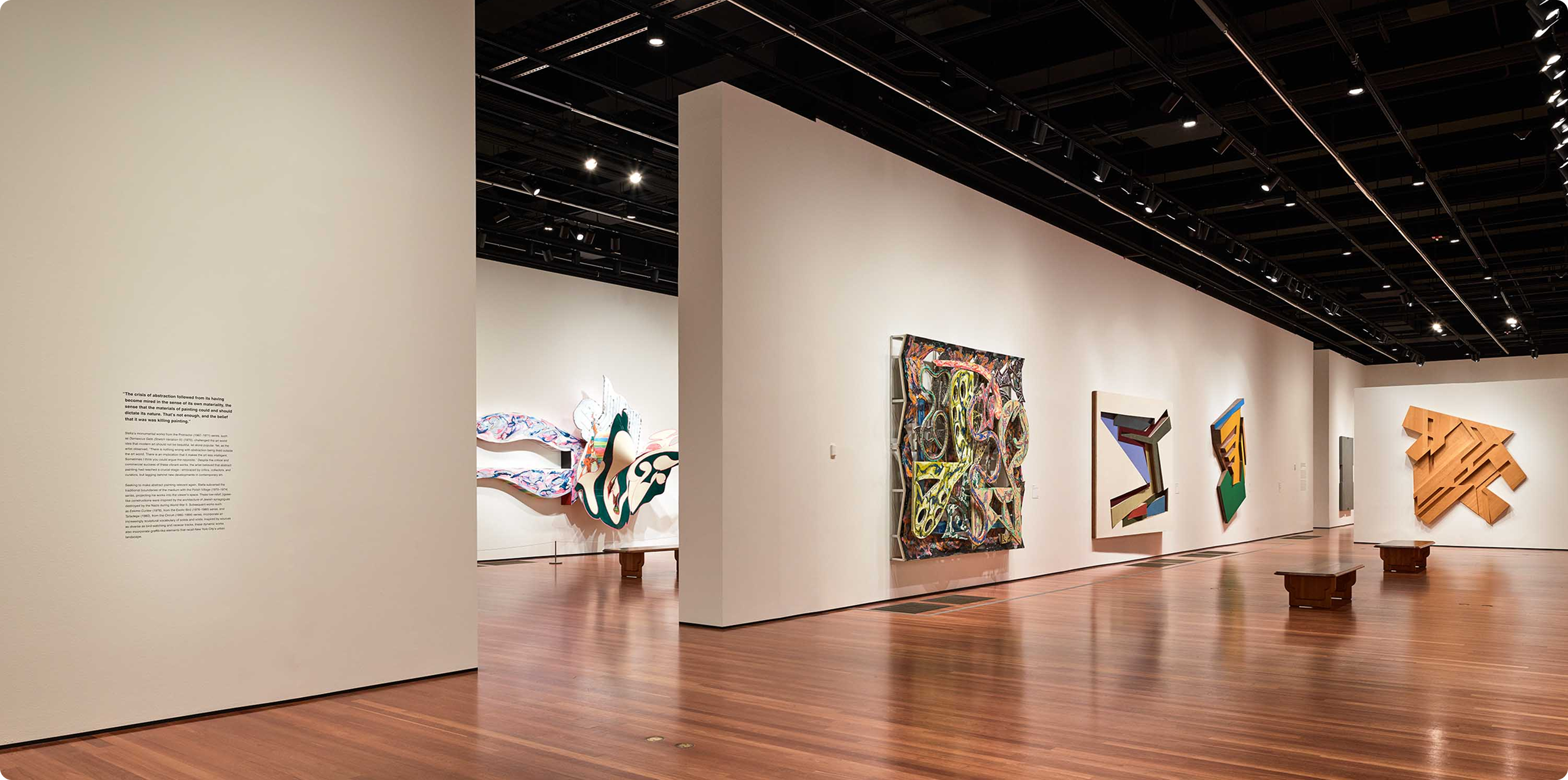
The challenge with a Stella retrospective is that the work already occupies the room so completely. His canvases are physically enormous, optically aggressive, and chromatically saturated. A timid exhibition design would disappear entirely; an overreaching one would compete with art that had been perfected over six decades.
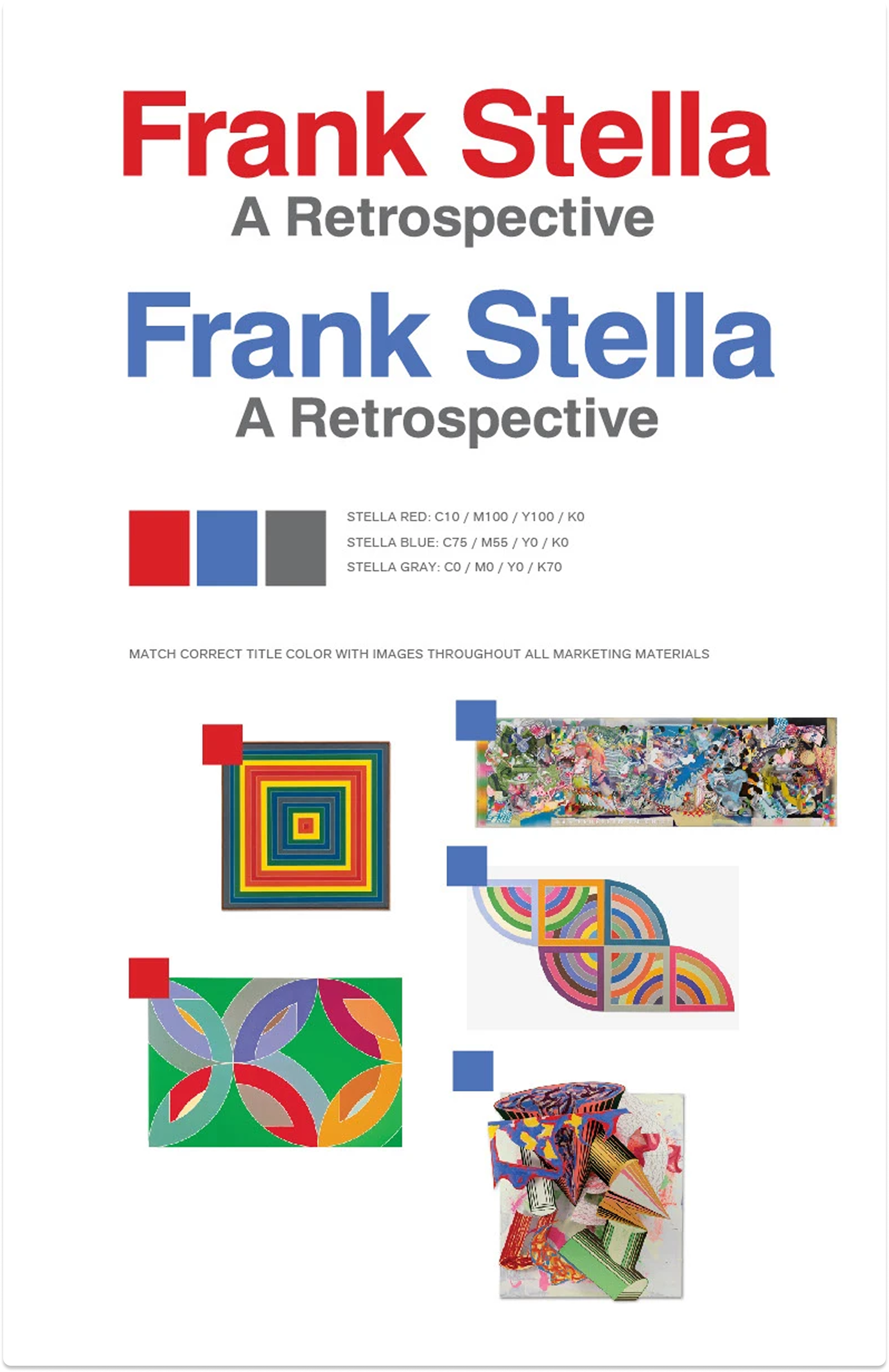
I developed a custom visual system that drew directly from the geometric logic of Stella's practice – sharp angles, structured color, typographic forms that echoed the precision of his shaped canvases – while maintaining enough restraint to serve the work rather than rival it. The typography was condensed and bold, chosen to hold its own at large environmental scales without softening into something decorative. Color was deployed deliberately, not decoratively, in direct dialogue with the palette moving through the galleries.
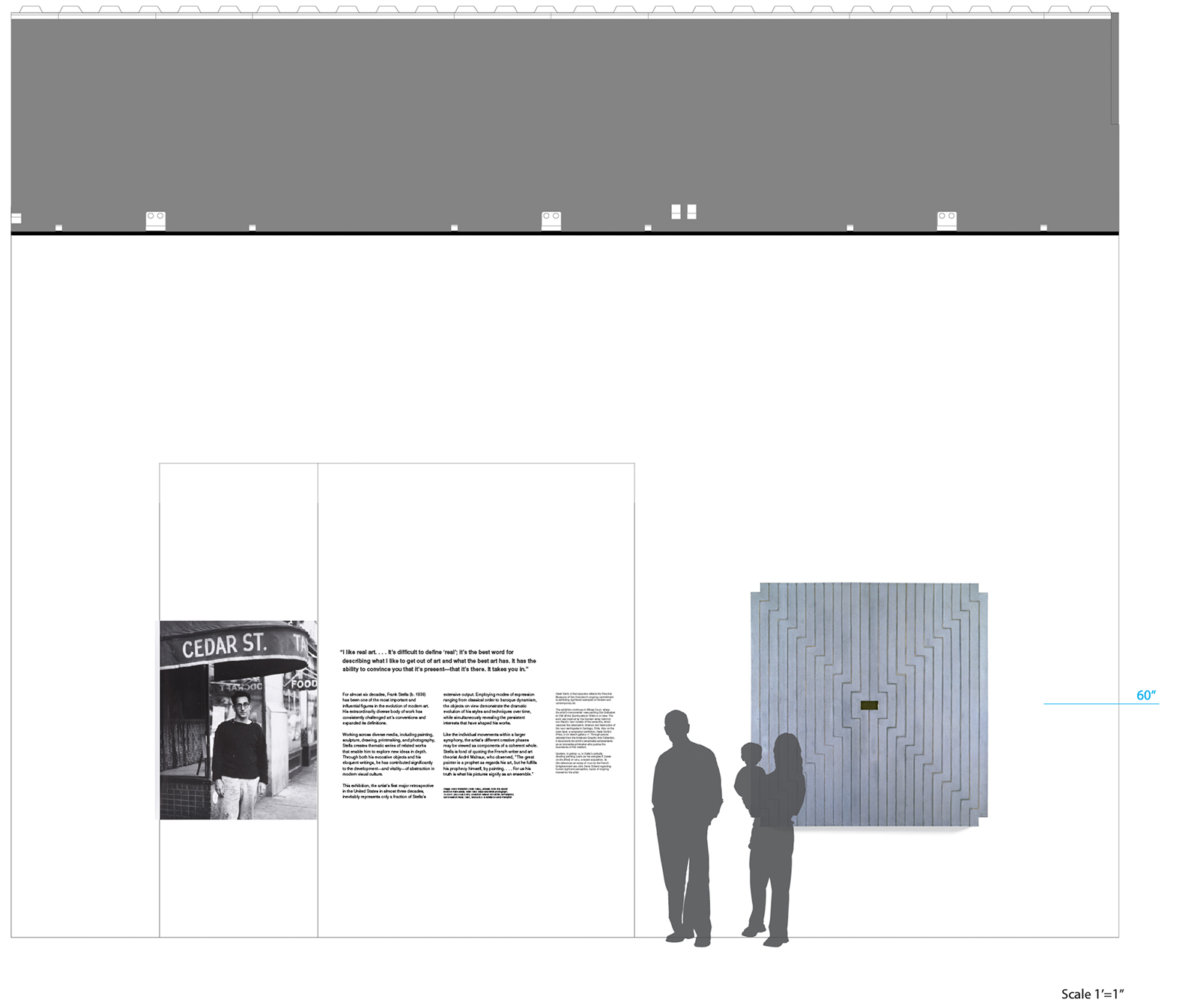
The way-finding system had to navigate a retrospective organized chronologically through radically different phases of Stella's career – each gallery essentially a different visual world. Clear, confident signage was critical to helping visitors understand the arc of the work without over-explaining it.
Implementation
Environmental, print, digital, and merchandise – one system, every surface.
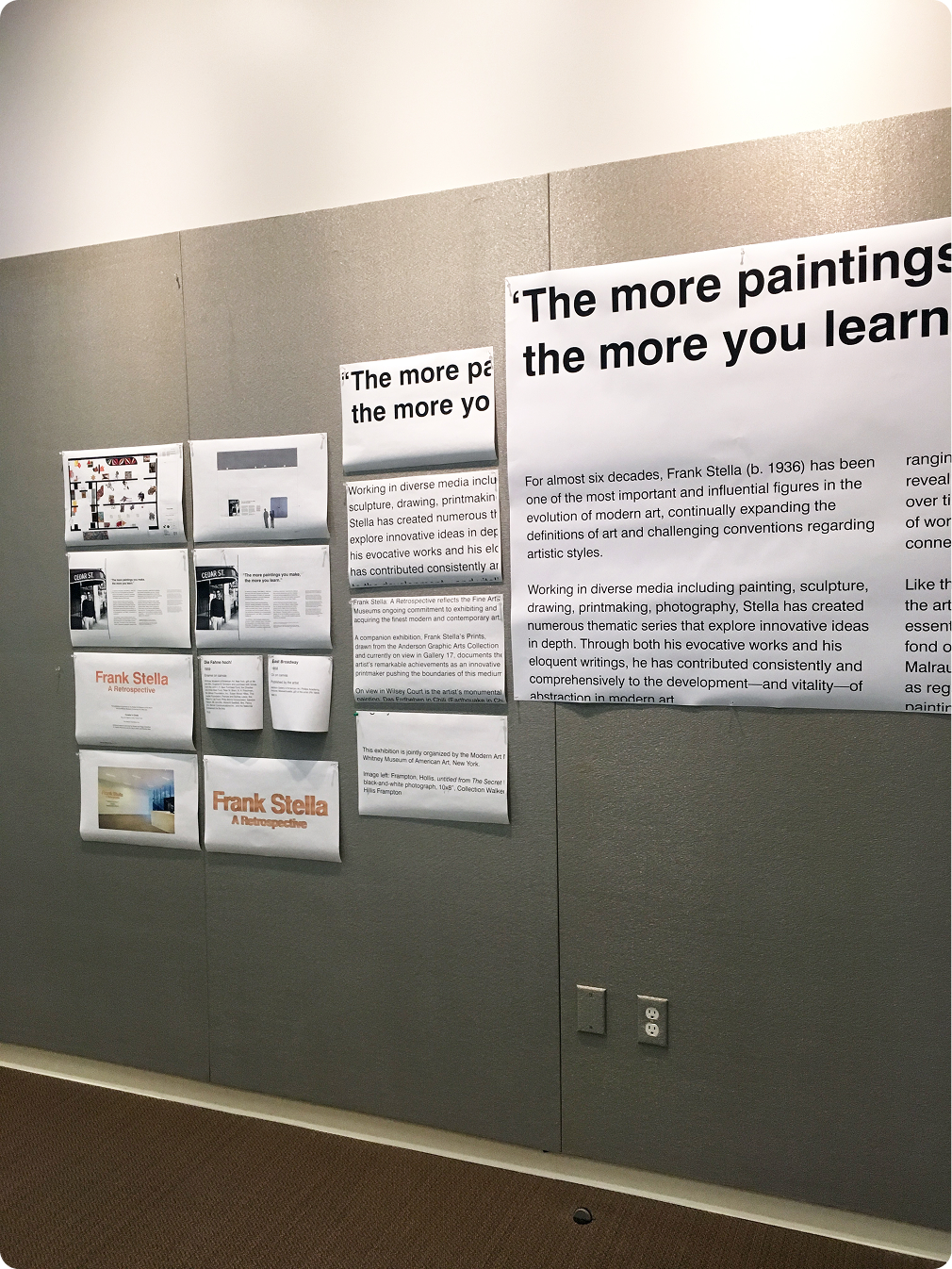
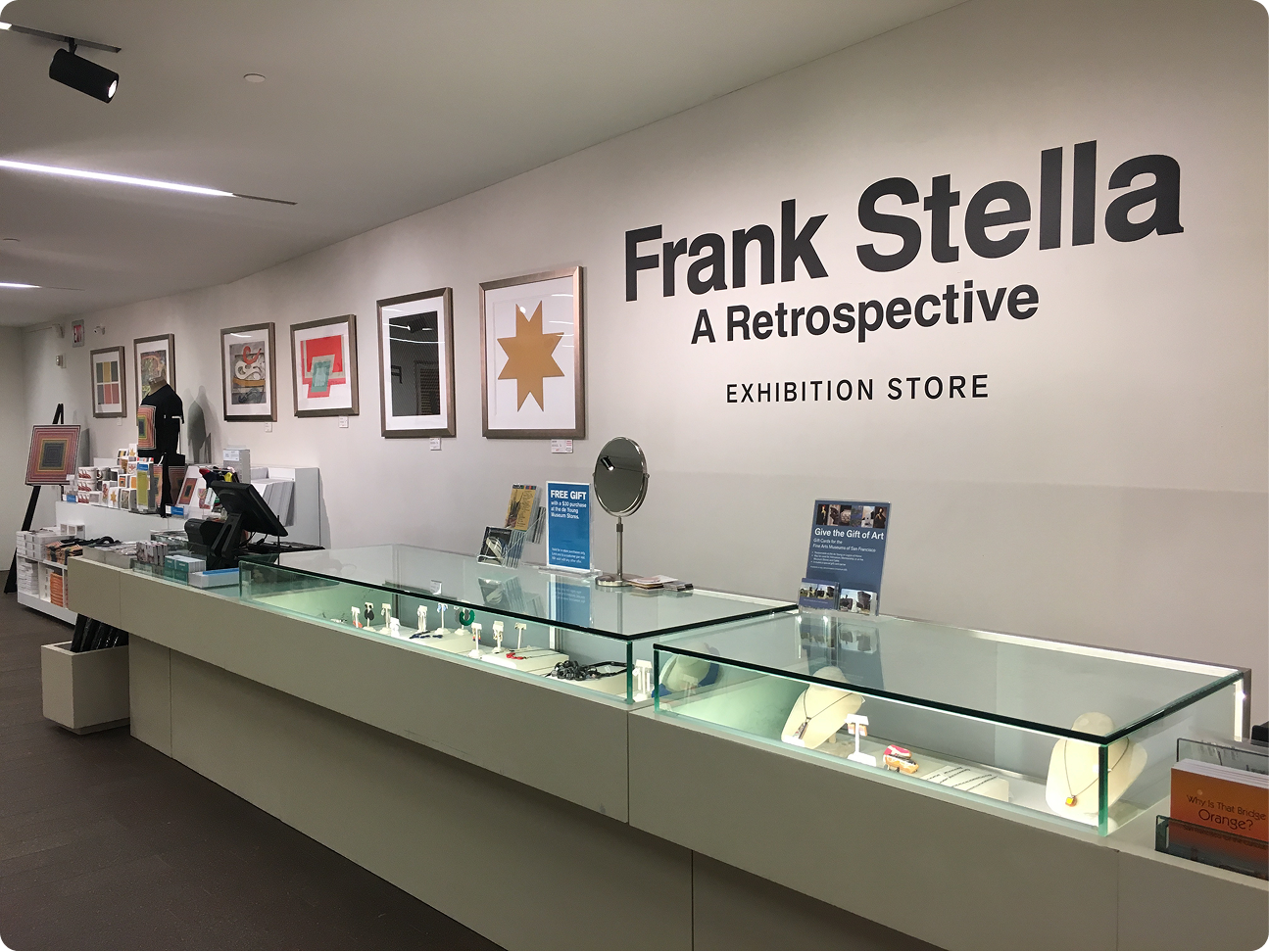
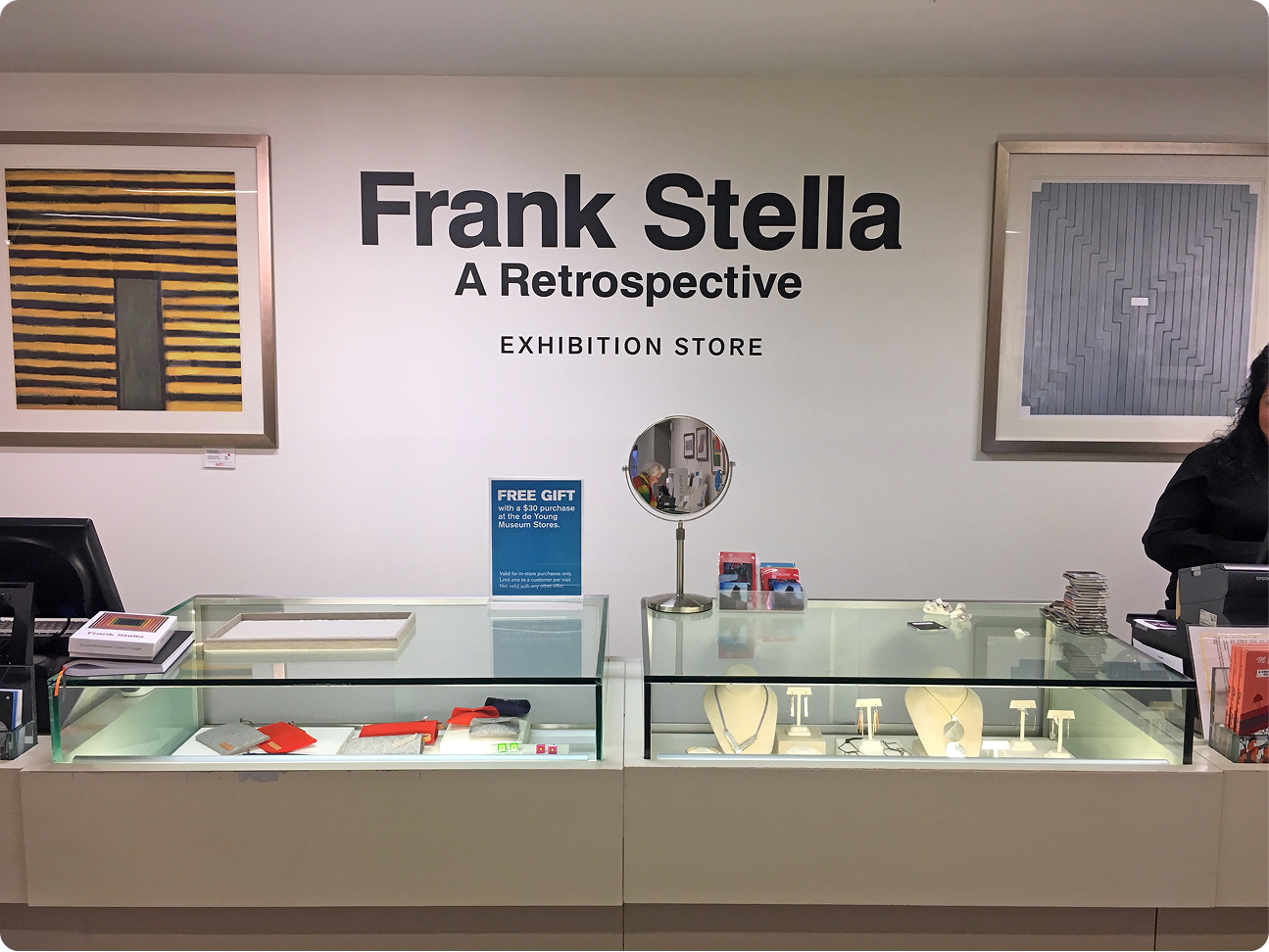
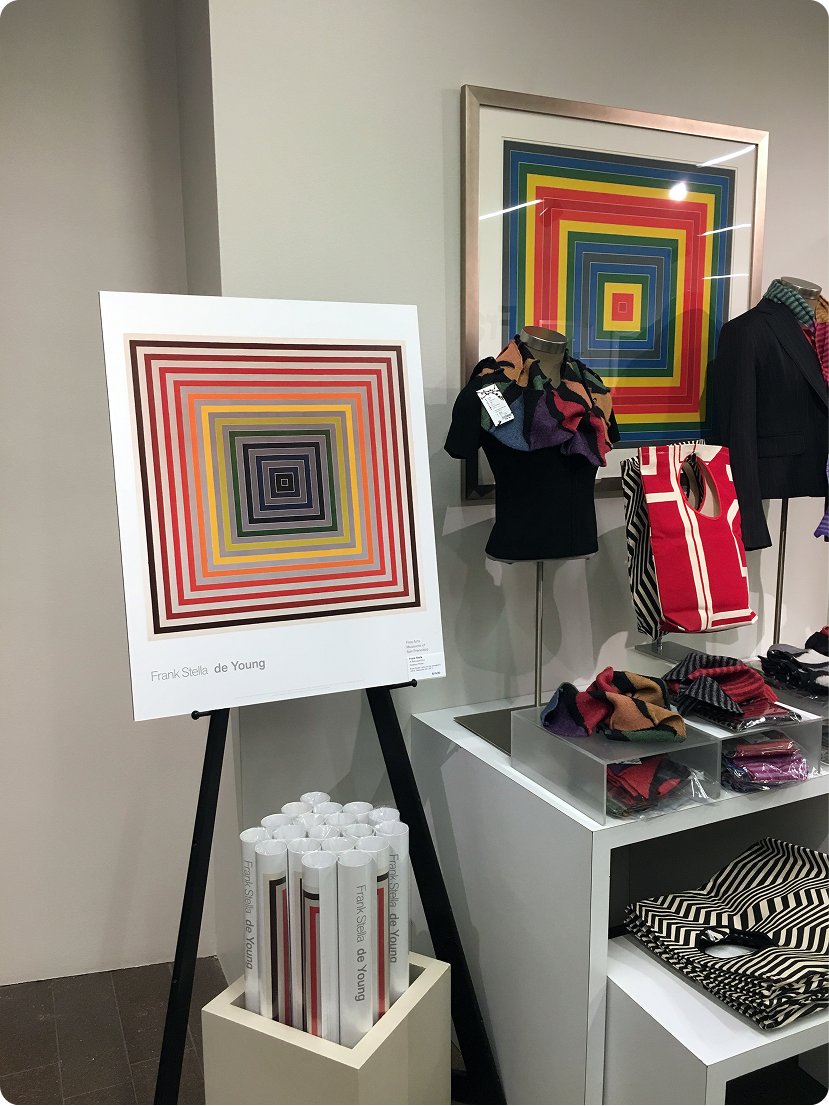
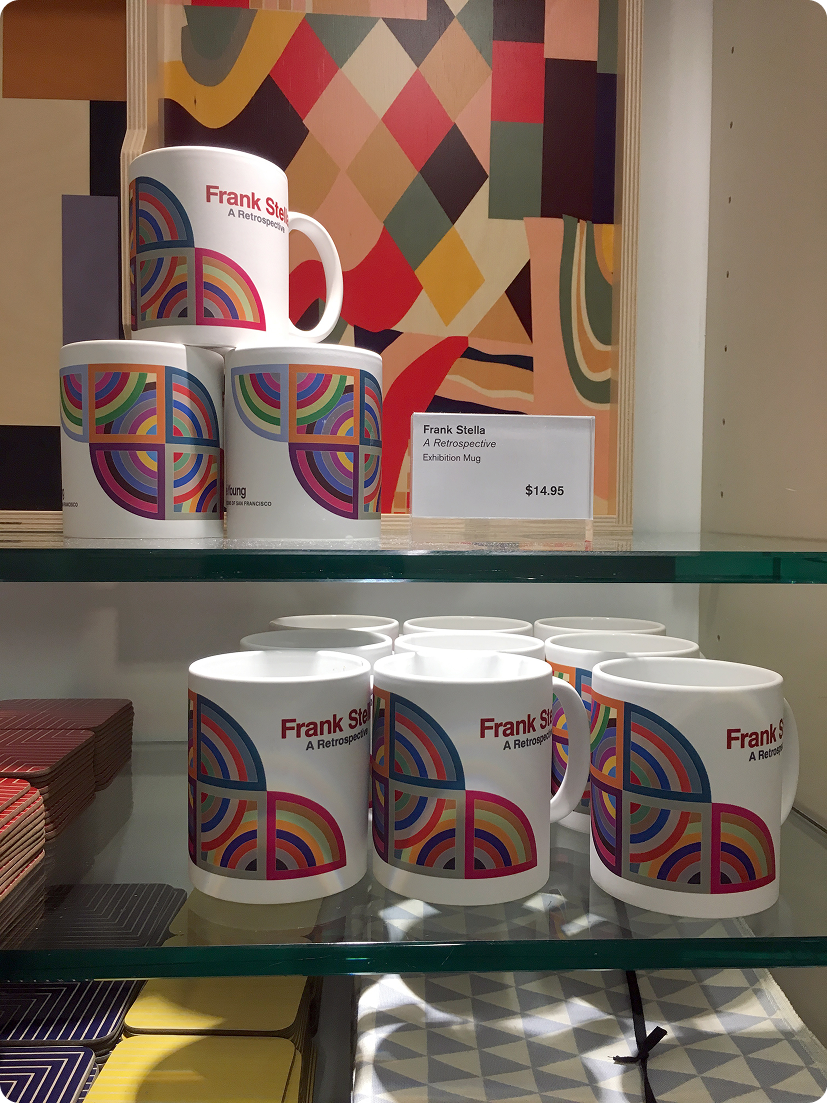
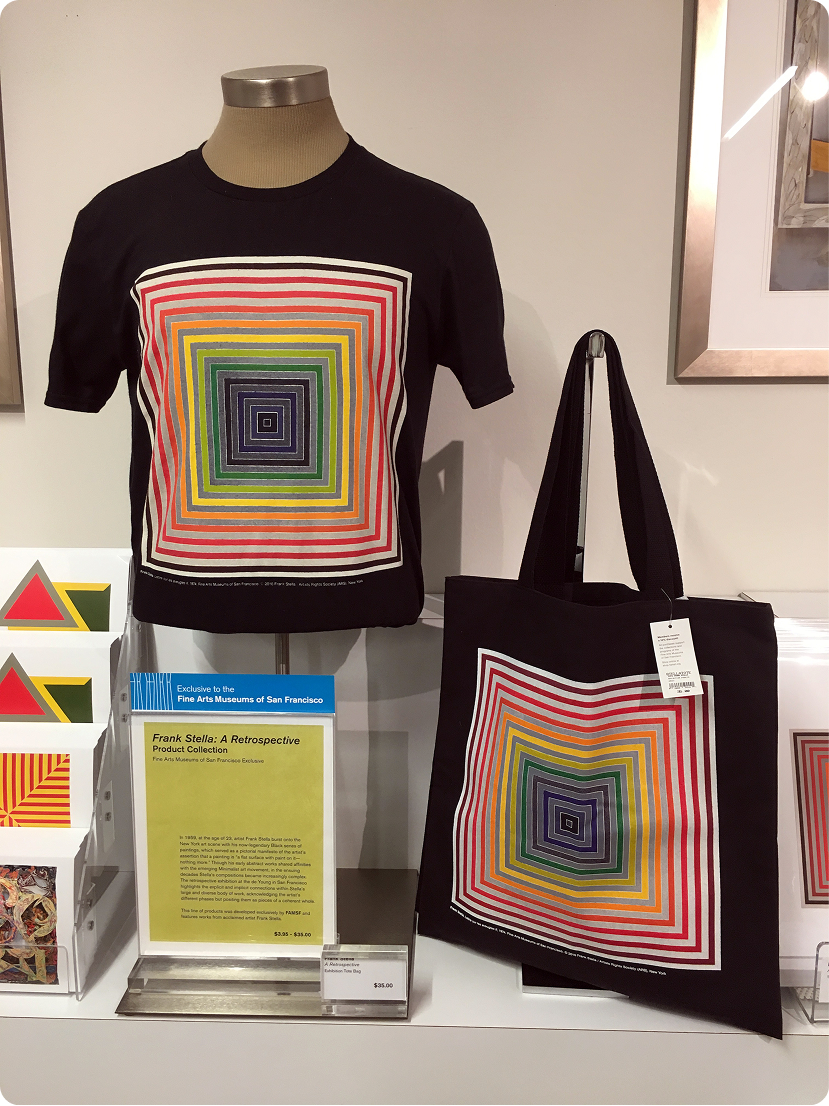
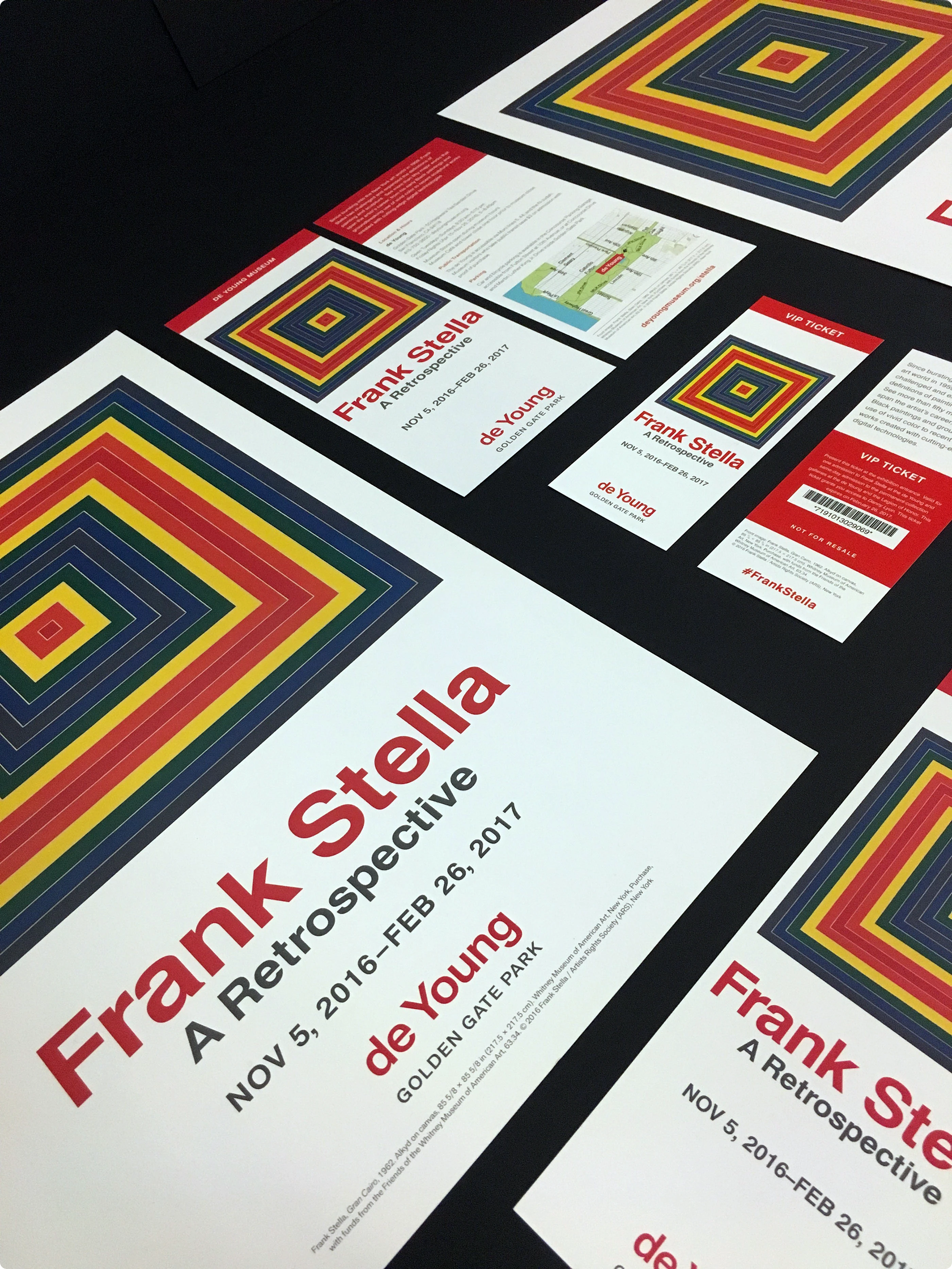
Production spanned the full range of exhibition deliverables simultaneously: large-format environmental vinyls, wall text and panel systems, print and digital marketing collateral, and a gift shop merchandise line that was the most expansive of the three FAMSF exhibitions I designed. With Stella's geometric, chromatic work as source material, the merch program had genuine design latitude – objects like posters, puzzles, and tote bags could carry the visual system's energy in ways that felt natural rather than forced.
Color matching across output formats was a particular production challenge: Stella's palette is precisely calibrated, and
maintaining fidelity from digital screens to matte wall panels to printed merchandise required careful management across every stage of production.
- Wall text
- Text panels
- Cut wall vinyls
- Wayfinding
- Color matching
- Print collateral
- Digital marketing
- Mugs
- T-shirts
- Tote bags
- Postcards
- Magnets
- Puzzles
- Posters
Results and Impact
A landmark retrospective and a visual system built to match it.
The exhibition ran from November 2016 through February 2017 at the de Young's Herbst Exhibition Galleries – one of FAMSF's main exhibition spaces. Designing a completely original identity for a show of this institutional stature, arriving from the Whitney and Fort Worth with its own history, required both creative confidence and a clear point of view about what the de Young presentation should feel and look like.
By the time of the Stella retrospective, I had designed three major FAMSF exhibitions in succession – each one demanding a distinct visual language and a different relationship to the work on the walls. The through-line across all three was the same commitment: build a system that knows exactly what it is, and let the art be exactly what it is.