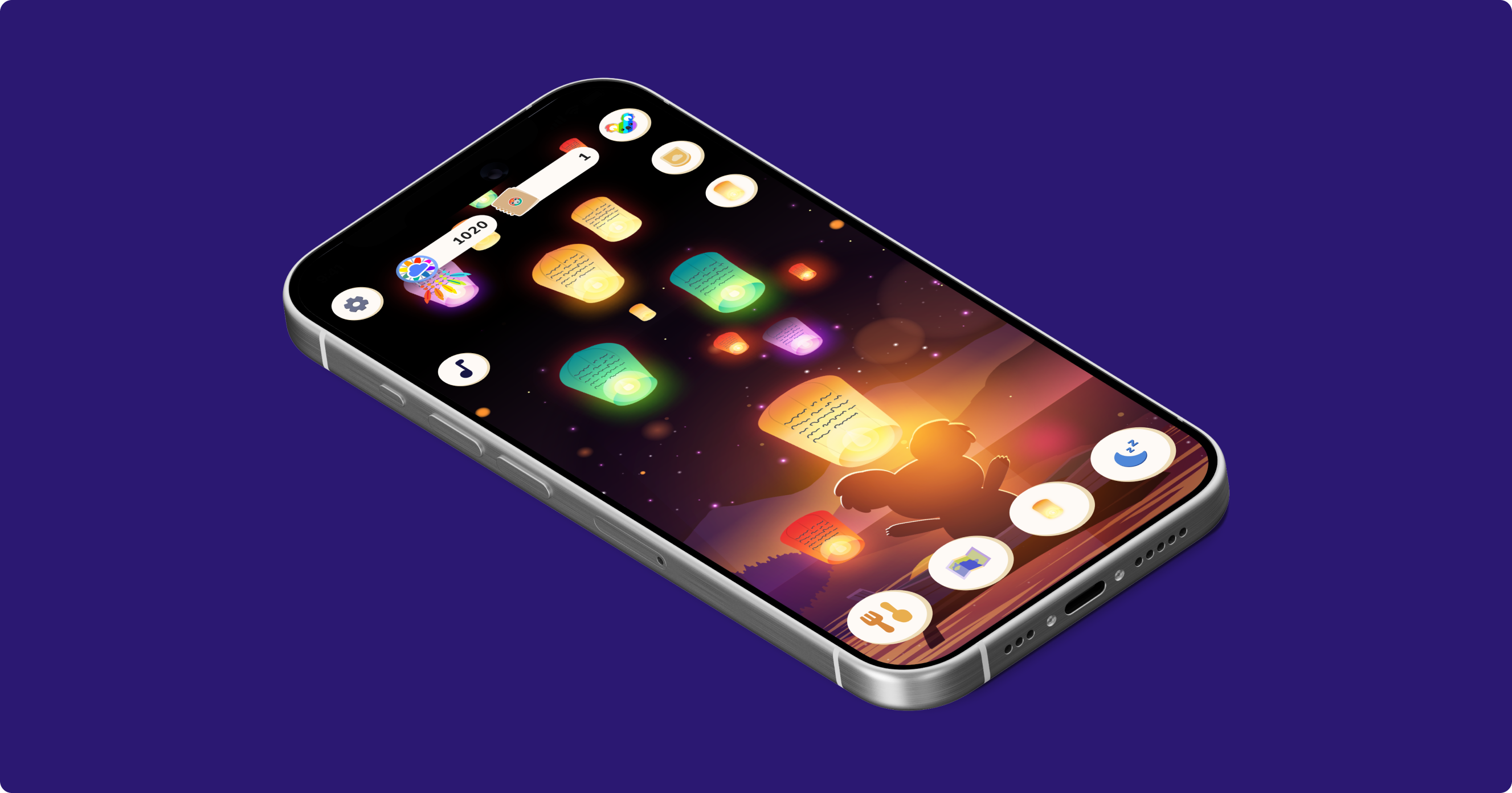
Lanterns: Mindfulness Journaling
Key Feature Development for Pocket Kado
Overview
ROLE
Head of Design & Cofounder
TEAM SIZE
3 – UI/UX Designer, Rive Animator, Myself
PLATFORM
iOS and Android
TIMELINE
2 months
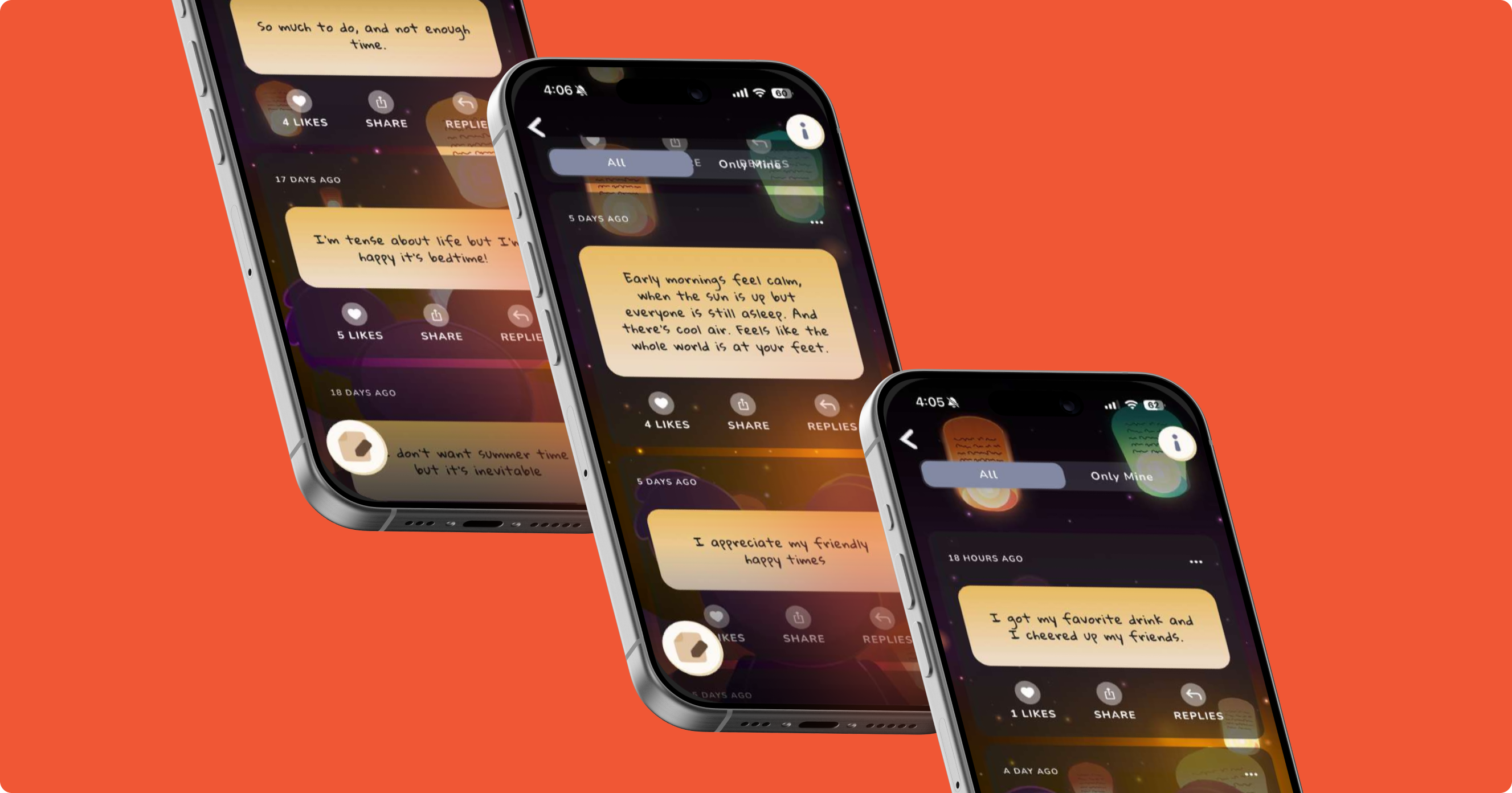
Lanterns is Pocket Kado's mindfulness journaling feature – a wind-down experience built around the therapeutic practice of releasing your worries, expressing gratitude, and reflection before sleep. Users can write what's keeping them awake, release it as a lantern into a shared night sky, and read and react to anonymous lanterns from other users struggling during the same restless hour.
As Head of Design and Cofounder of Revery Labs, makers of Pocket Kado, I led the design phase end to end – facilitating user interviews, guiding the product direction, giving feedback on lantern shapes and UI design, defining the interaction model, and creating the tech spec and engineering tickets for the sprint. I led our UI/UX designer, Clara Q, and our Rive animator, Liuba S.
Research and Discovery
The loneliest hour of the day is 2am in a quiet bedroom.
User research surfaced a core emotional truth about our users' sleep experience: the peace and quiet that surrounds them at bedtime compounds the feeling of loneliness. They lie awake, minds racing, while the people they love are already asleep.
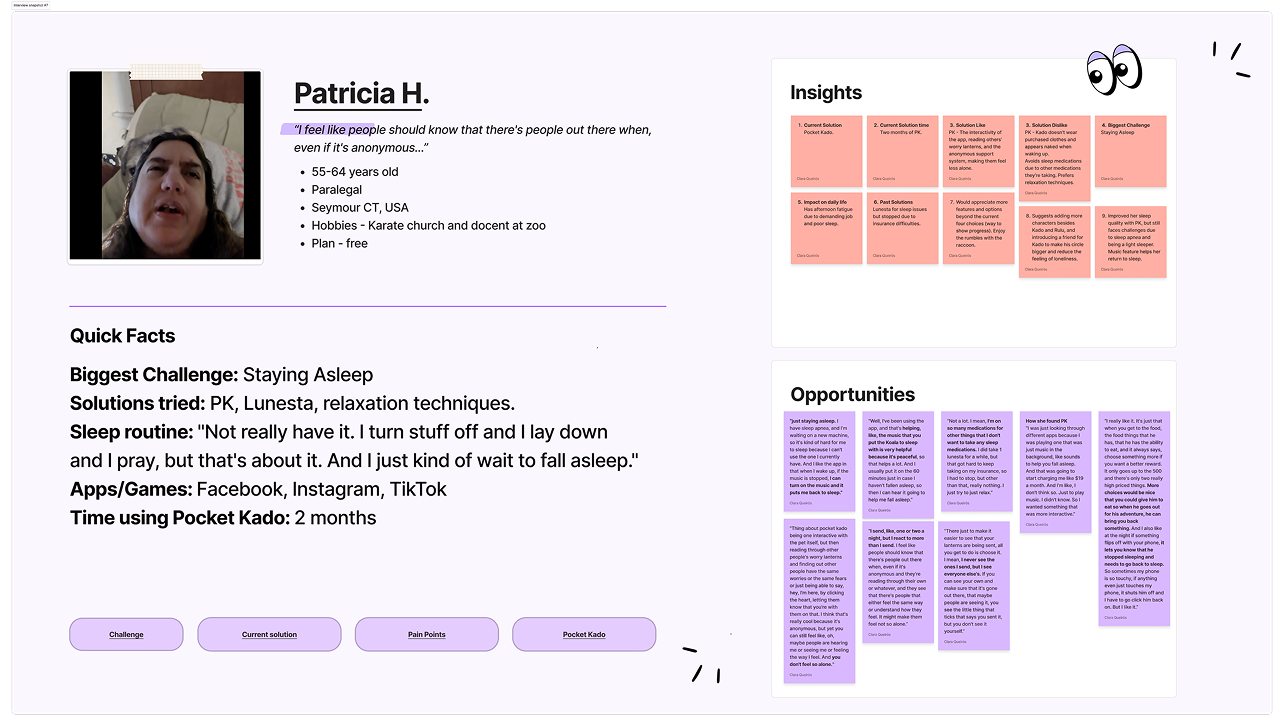
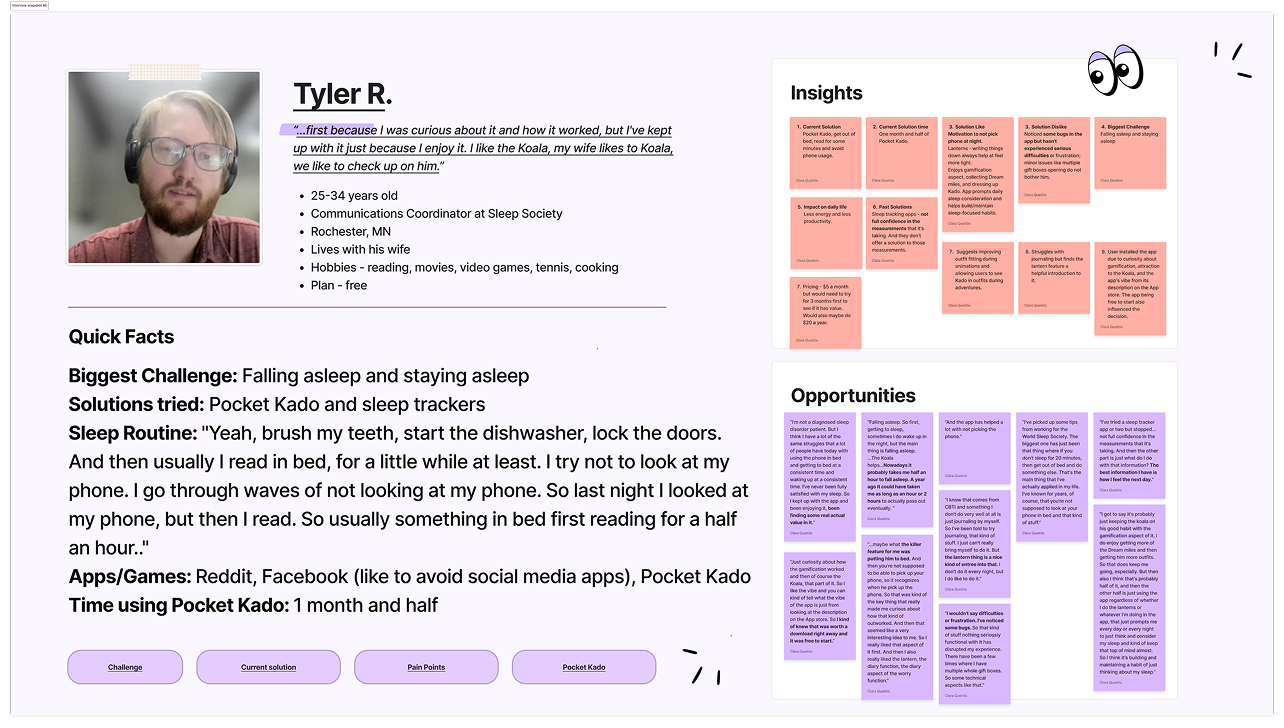
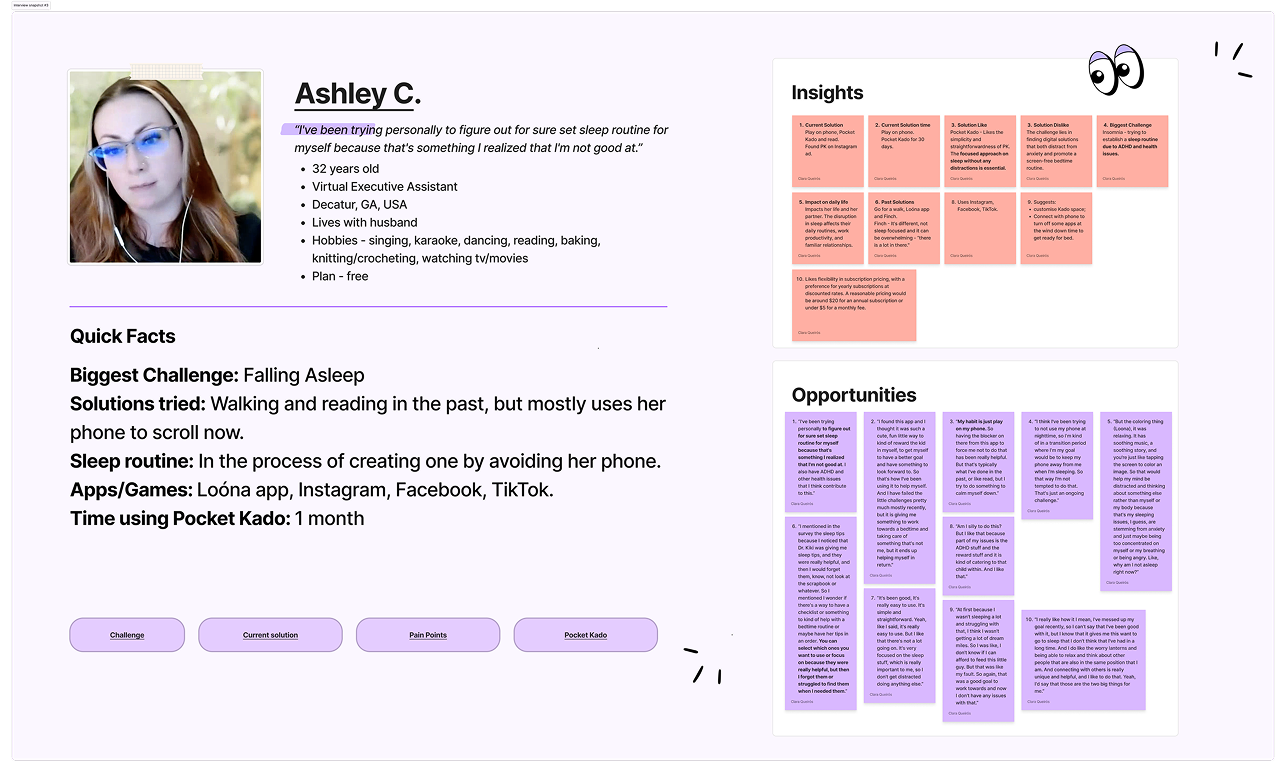
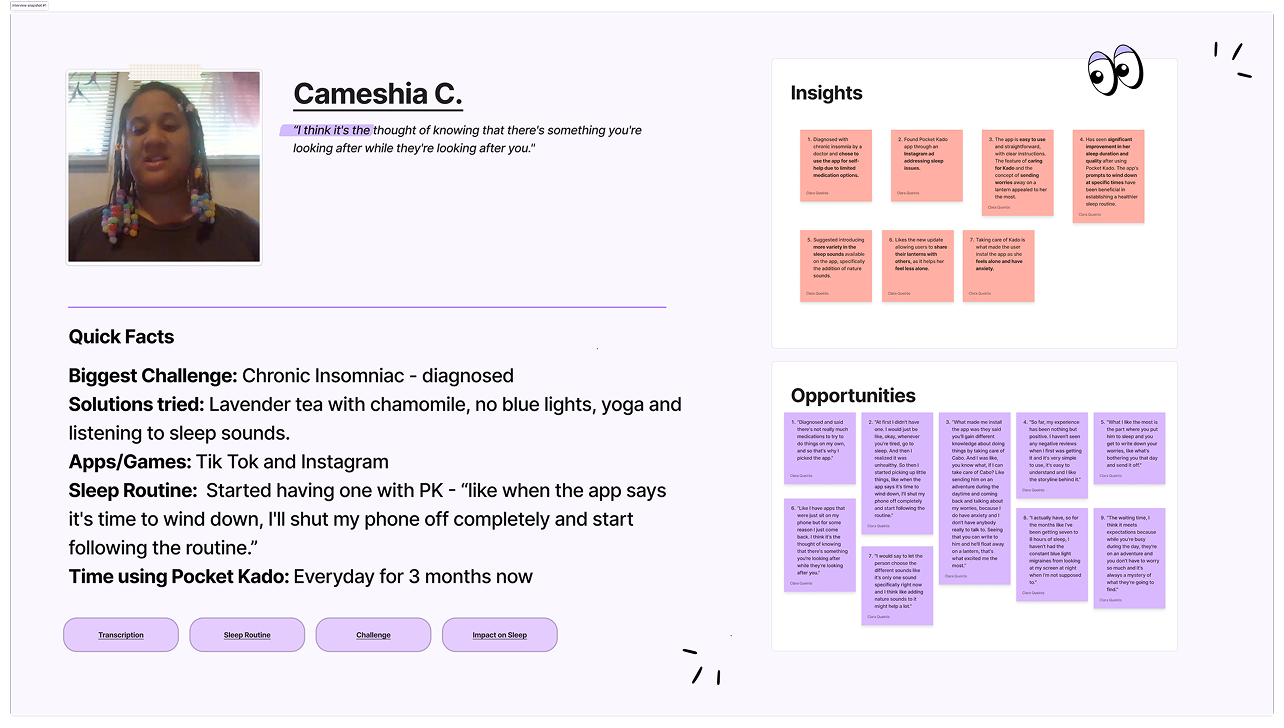
Research included user interviews, survey data, and qualitative feedback from our Facebook community group. Three distinct user archetypes emerged from behavioral analysis inside the app's sleep mode.
- User type 1: Winds down using other apps first, then logs in to put Kado to bed. Skips lanterns because they are afraid writing will wake Kado up.
- User type 2: Logs into the app and puts Kado to bed. Does 1–2 lanterns as part of their routine. The core engaged user.
- User type 3: Logs in close to bedtime and puts Kado straight to sleep. Least motivated to wind down. Needs a lower-friction entry point.
Interview findings gave us both the opportunity and the design constraints. Users described the existing lanterns experience as peaceful, and said they already felt less alone after writing one. But they wanted more – they wanted to know other people were out there.
At the same time, they were worried: worried about reading content that would deepen their anxiety, and worried about receiving harmful messages from strangers. The design problem was to connect people without exposing them.
Key insight from interviews
Users who sent lanterns publicly weren't doing it for themselves – they were doing it for other people too. They wanted to show someone else, somewhere else, that they weren't alone either.
User Interview Profiles
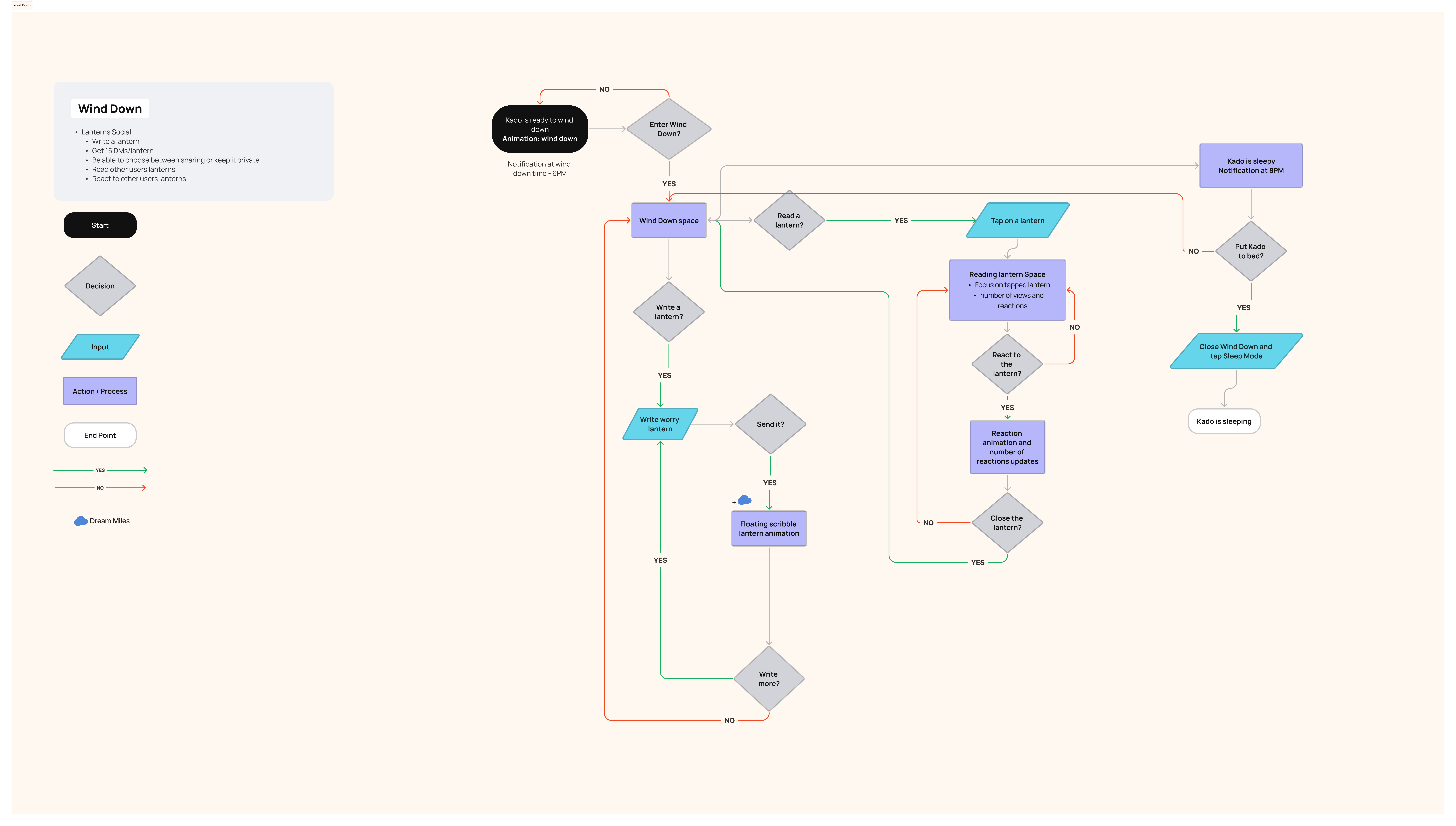
Lantern Flow User Journey
Inspiration and Reference Images

Challenge and Solution
Build a social feature that feels nothing like social media.
The core design challenge was building a social layer for one of the most emotionally vulnerable moments of the day. We had to address bedtime anxiety without introducing the risks that make social media feel unsafe: judgment, comparison, harmful content, and the pressure to perform.
- Decision 1: Likes only, no comments
Users can react with a heart but cannot reply or comment. This was a deliberate choice to create a space of pure support – no negativity is structurally possible. - Decision 2: Full anonymity, public or private
All lanterns are anonymous regardless of public/private mode. Public means others can read and react – but never know who wrote it. This removed the vulnerability barrier to sharing. - Decision 3: Dark reds, no blue light
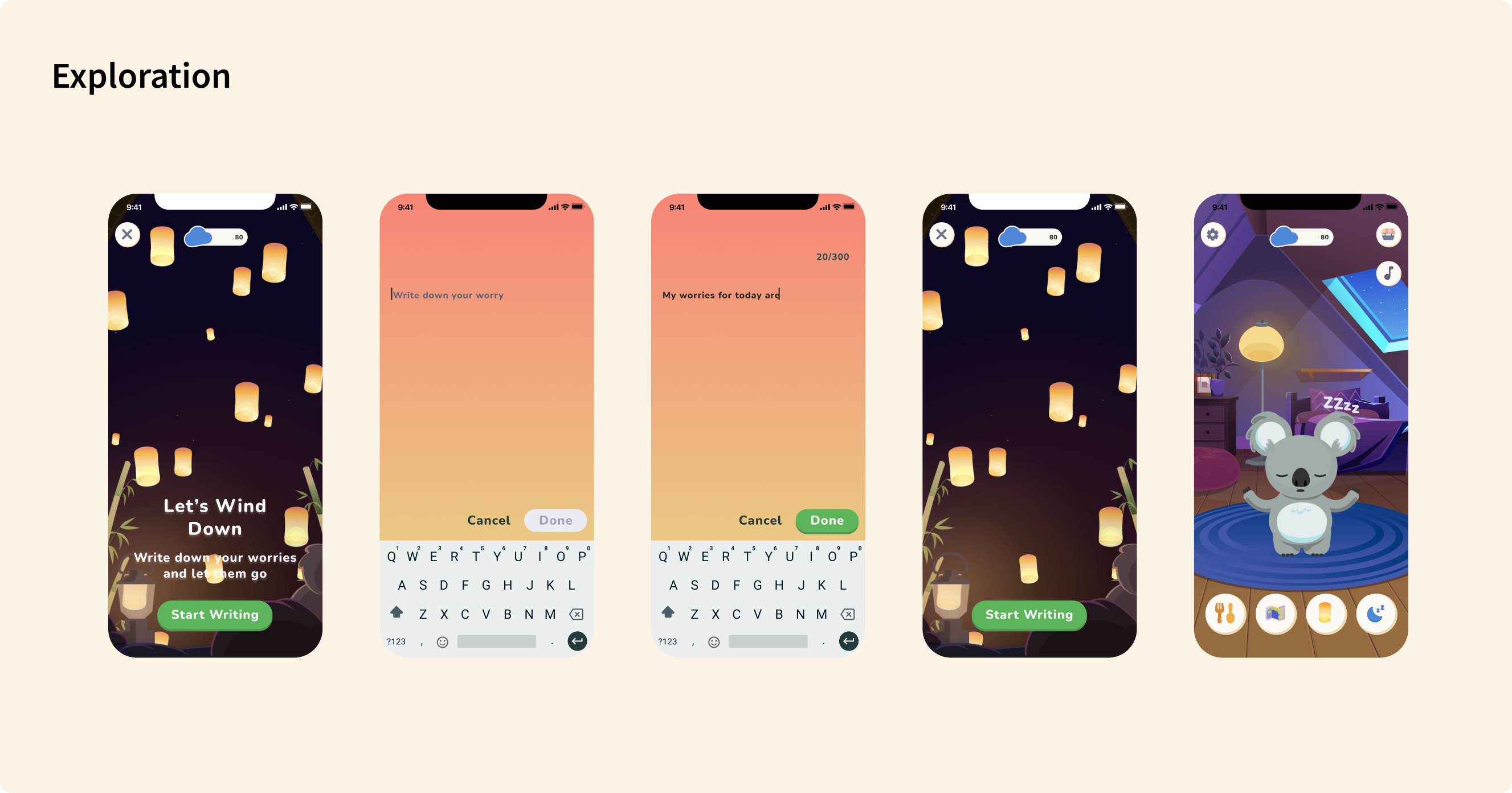
The Wind Down space was designed in deep reds and warm tones to minimize blue light exposure – a deliberate sleep science decision embedded into the visual design itself.
- Decision 4: Wind Down separated from Sleep Mode
CBT-I principles state the bed should be associated only with sleep. Separating Wind Down from Sleep Mode as distinct spaces reinforced this. - Decision 5: Kado as emotional anchor
Kado appears in the Wind Down space looking up at the lanterns floating above. When a lantern is released, a Rive animation plays of Kado reacting – making the act of letting go feel witnessed and affirmed. - Decision 6: Dream Miles incentive
Users earn 15 Dream Miles per lantern sent – tying the feature into the app's existing reward system and giving a concrete incentive for the wind-down habit.
Exploration
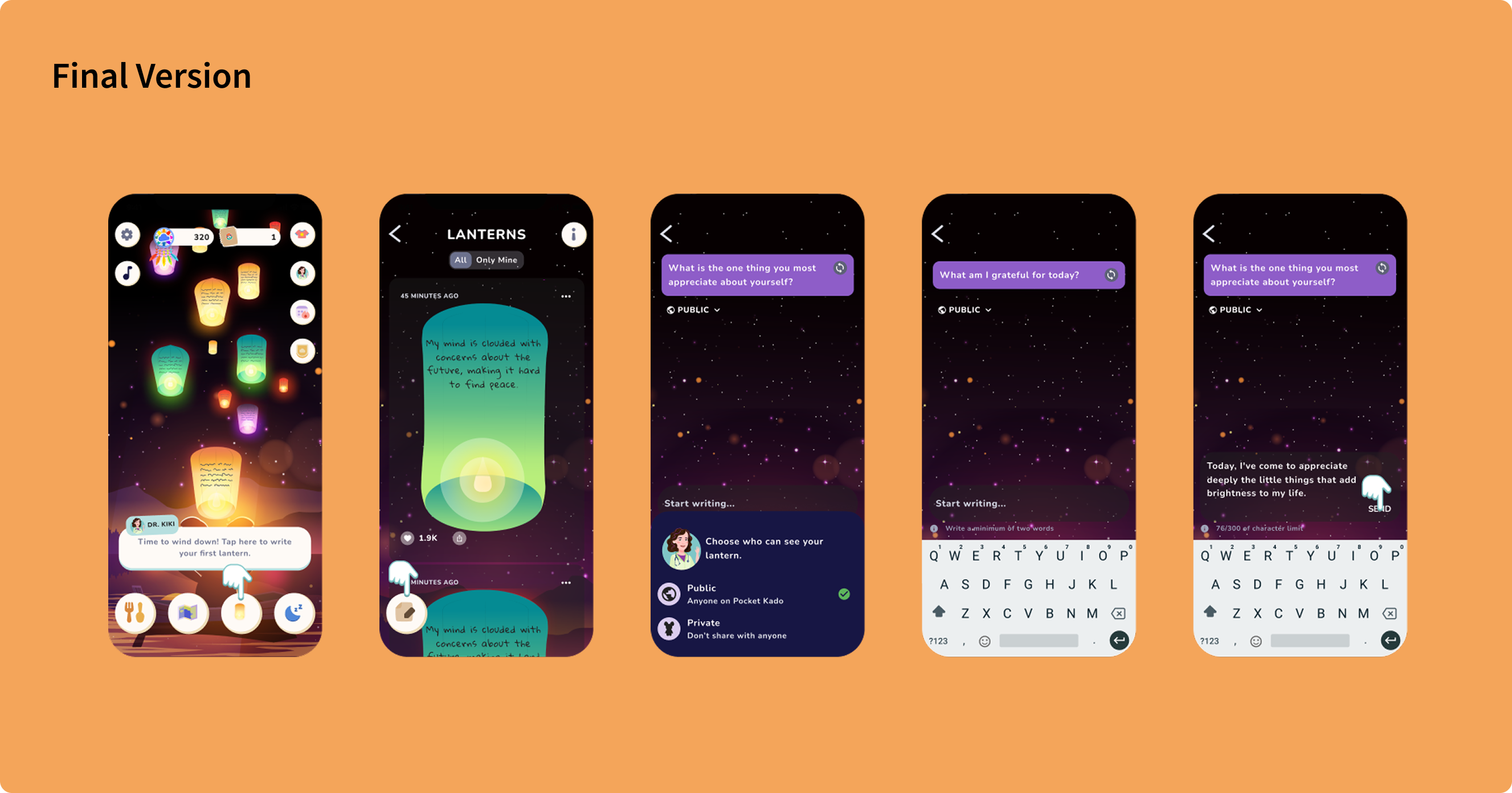
Implementation
From design direction to engineering sprint – owning the full product development process.
After leading the design phase, I created the tech spec and wrote the engineering tickets for the sprint – translating the design decisions into a buildable spec that covered the Lanterns FTUE, write and read flows, public/private session switching, reaction mechanics, notification triggers, Sleep Log integration, and edge cases including what happens when no lanterns exist and how Kado's accelerometer-triggered behavior interacts with Wind Down Lanterns.
The UI was built with engineering complexity in mind from the start. Lantern shapes and animations were scoped to what our Rive animator could build within the sprint, and the interaction model – swipe to read, and tap to react – was kept deliberate and simple. No feature that required significant back-end complexity was included unless it was essential to the core emotional experience.
The Sleep Log was updated as part of the same sprint to surface lantern stats including views, reactions, and Dream Miles earned to give users a morning summary of the community support they'd received while asleep.
Writing the tech spec myself, after leading the design, meant there was no translation loss between design intent and engineering execution. The spec covered functionality details, edge cases, FTUE flows, notification copy, Dream Miles triggers, and Sleep Log updates in a single document the engineering team could build directly from.
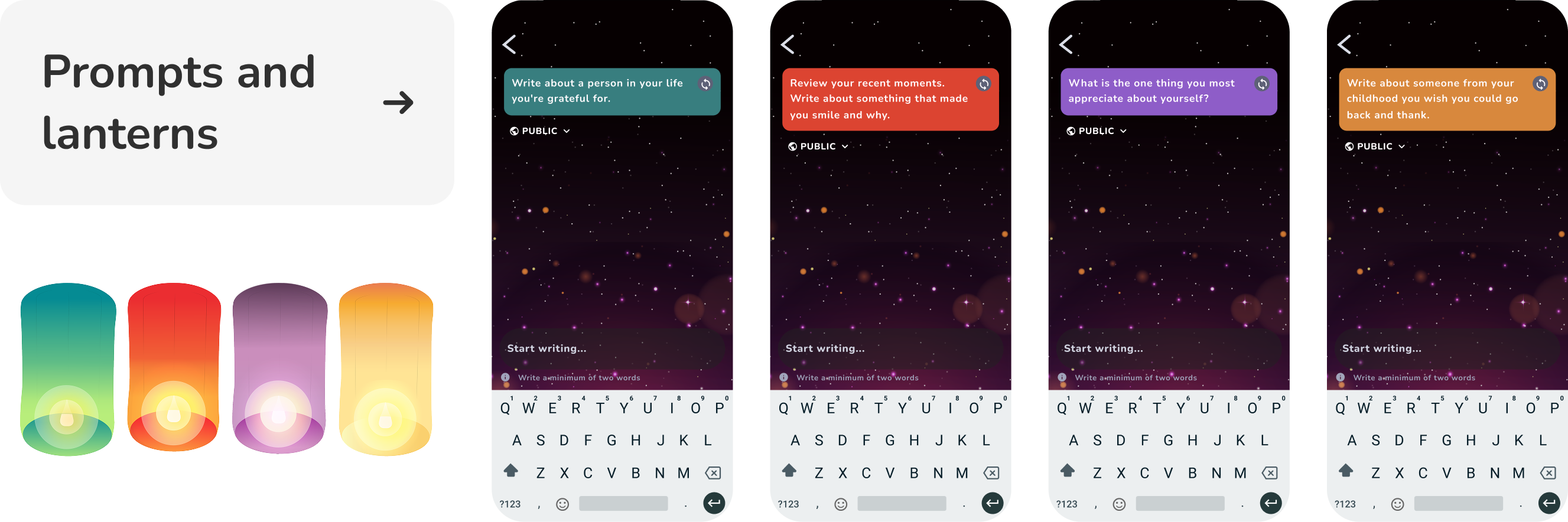
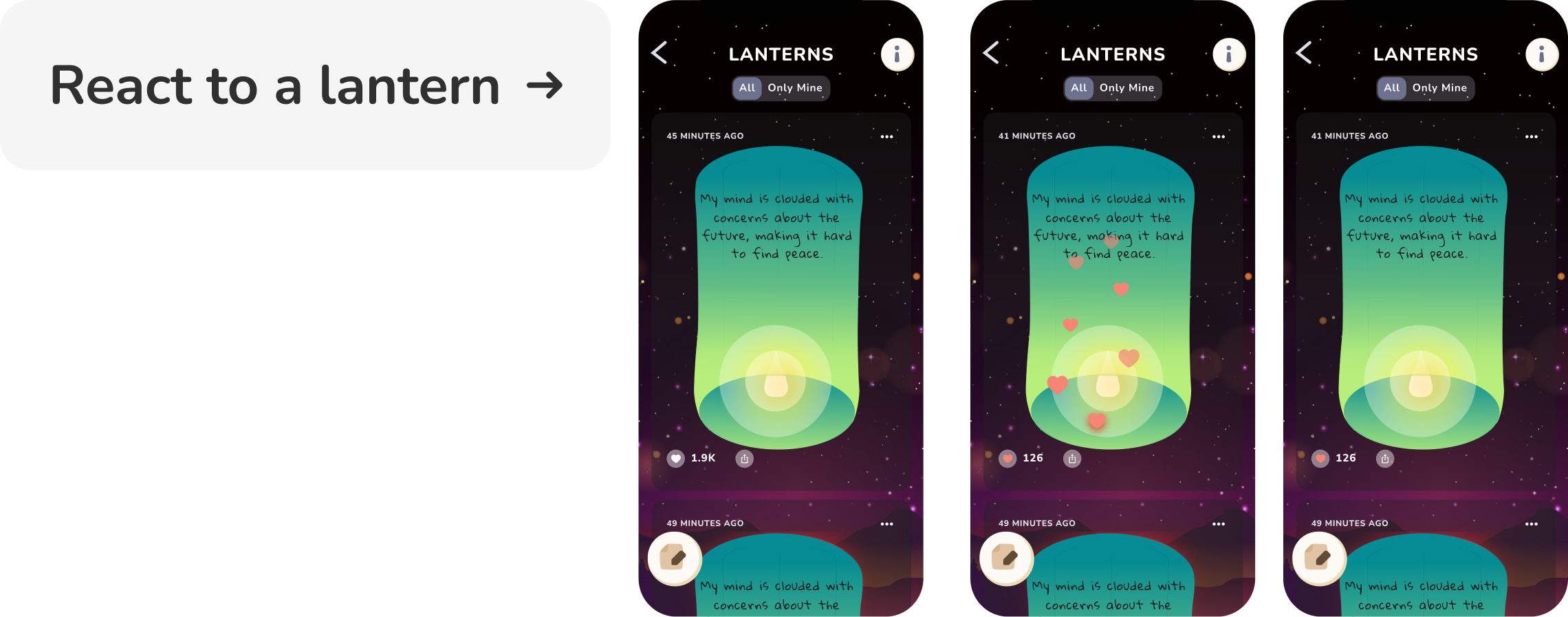
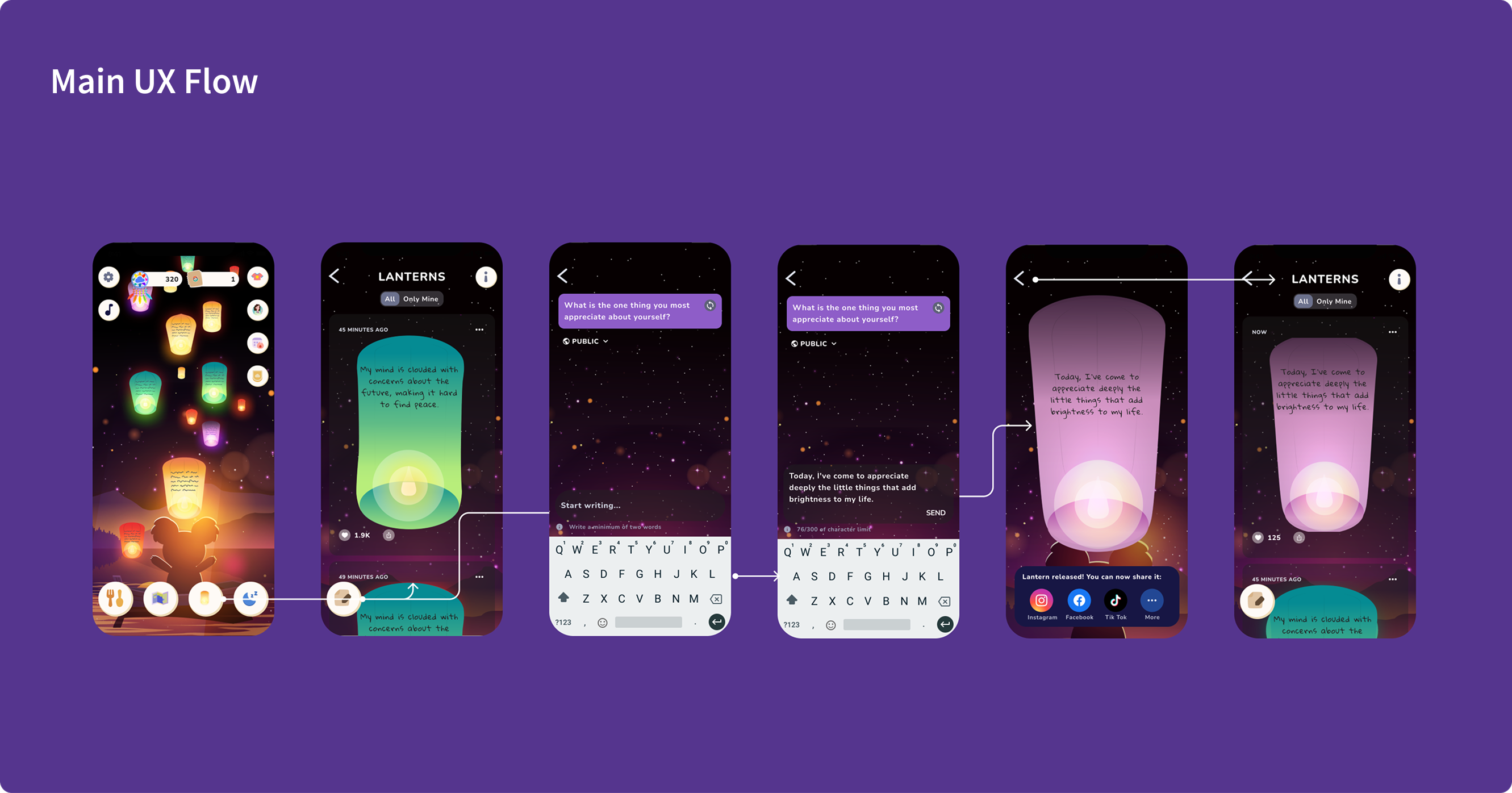

Results and Impact
The data confirmed what the interviews told us: people needed this.
The feature was released on May 29, 2023. Post-launch Amplitude analysis tracked over the first 14 days and returned results that validated every core design hypothesis.
83%
Lanterns sent publicly
12.58
Average lanterns sent per day
48%
Wind Down users who read lanterns
32
Average lanterns read per session
69.2%
Readers who give at least one heart
503
Hearts sent in first 14 days
The most telling number is 83% – the share of lanterns sent publicly. The design hypothesis was that anonymity would unlock sharing. The data confirmed it: users weren't just journaling privately, they were actively choosing to contribute to a community of strangers having the same quiet, anxious night. They were sending their lanterns for other people.
The 69.2% conversion from reading to reacting meant that nearly 7 in 10 users who opened a lantern gave at least one heart, validating the likes-only interaction model. A purely positive mechanic turned out to be a highly engaging one.
Early retention data showed that users who engaged with lanterns demonstrated higher D1 and D7 retention than those who didn't, suggesting the feature was doing exactly what community features should do: bring people back.