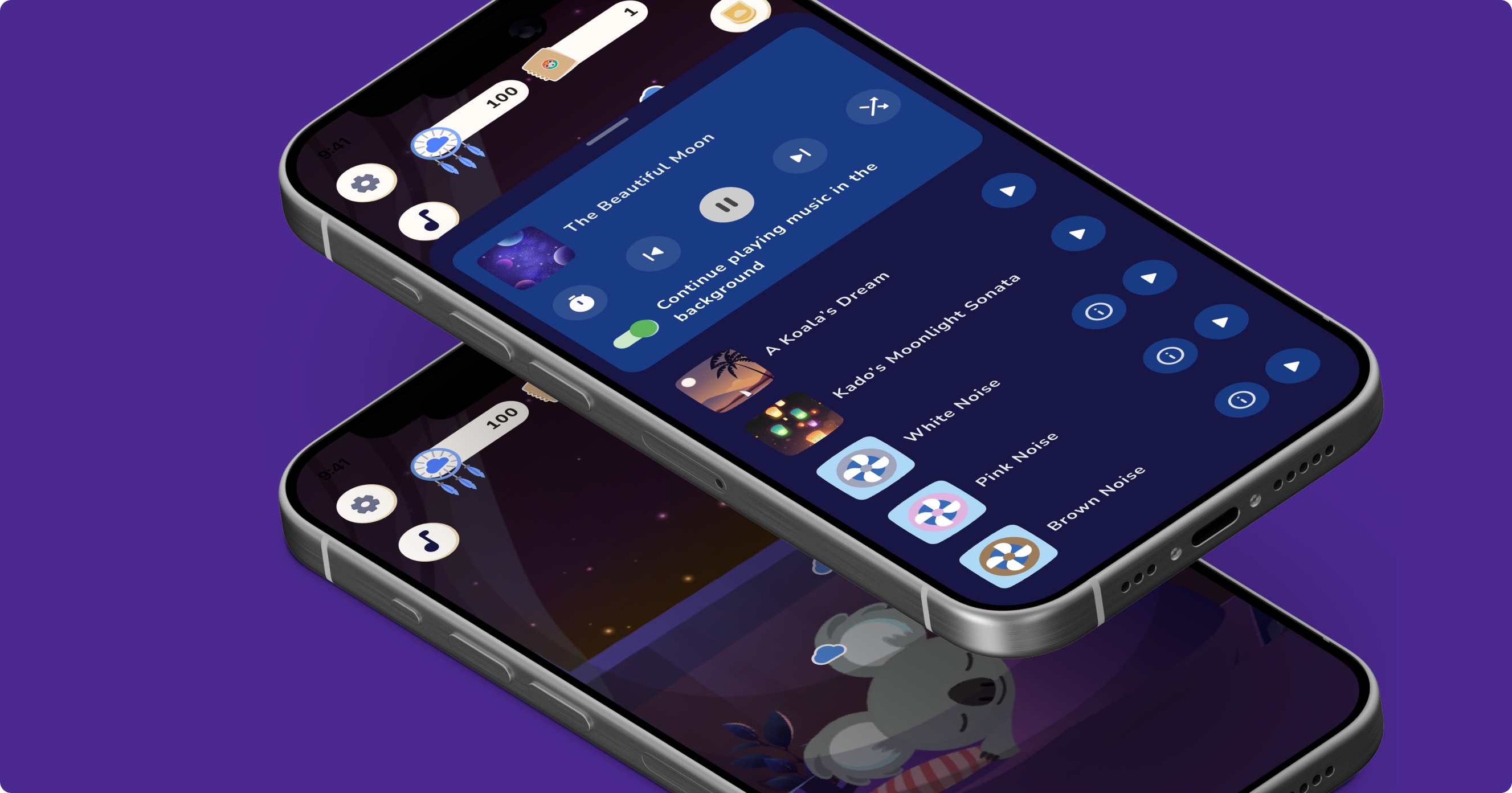
Dreaming with Sleep Sounds
Key Feature Development for Pocket Kado
Overview
ROLE
Head of Design & Cofounder
TEAM SIZE
3 – UI/UX Designer, Rive Animator, Myself
PLATFORM
iOS and Android
TIMELINE
2 months
Most wellness apps tell you to put your phone down. We built a feature that actually rewards you for it. Dreaming with Sleep Sounds is Pocket Kado's nighttime mode – a first-of-its-kind mechanic that turns uninterrupted sleep into in-game currency.
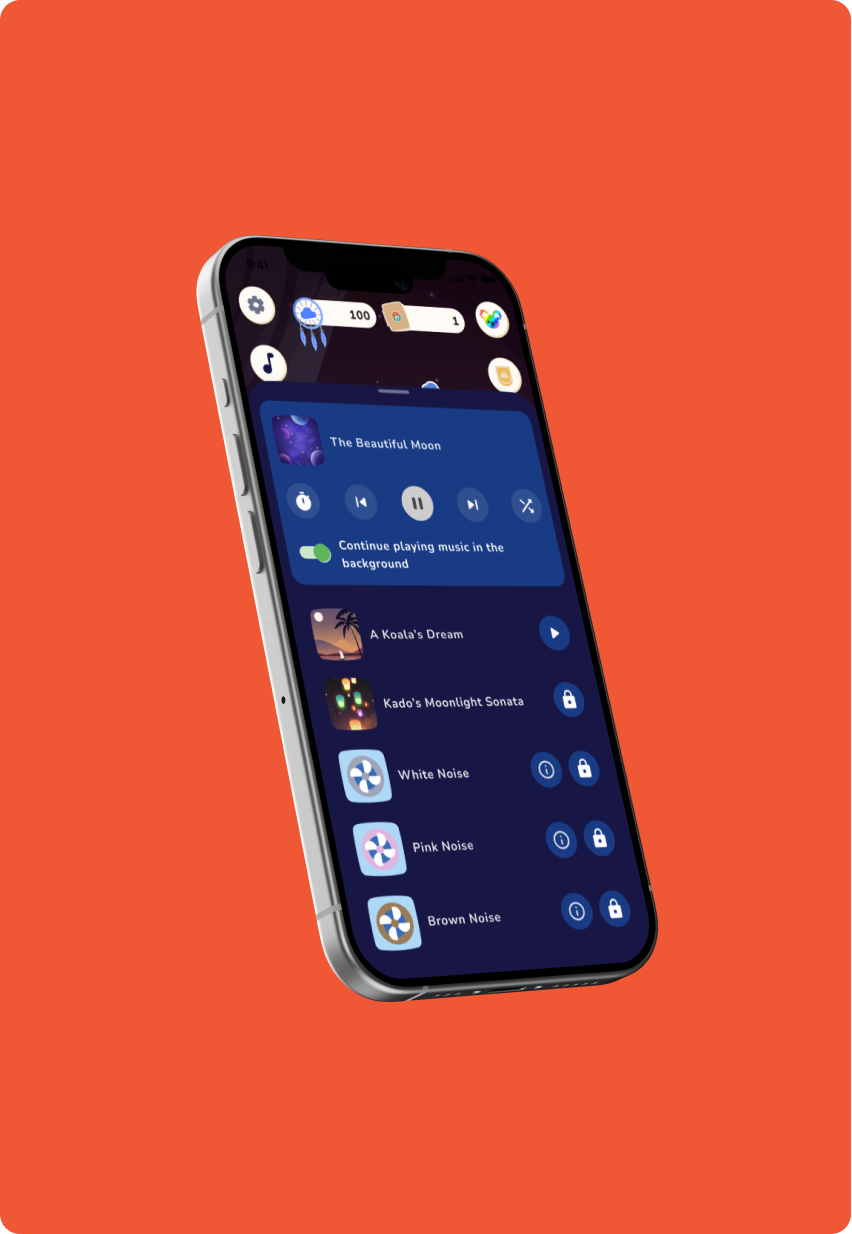
Every minute the user keeps the app open and their screen down, Kado earns 1 Dream Mile. Paired with calming ambient sleep sounds and a custom-animated sleep environment, the feature was designed to make staying off your phone feel more satisfying than doom scrolling ever could.
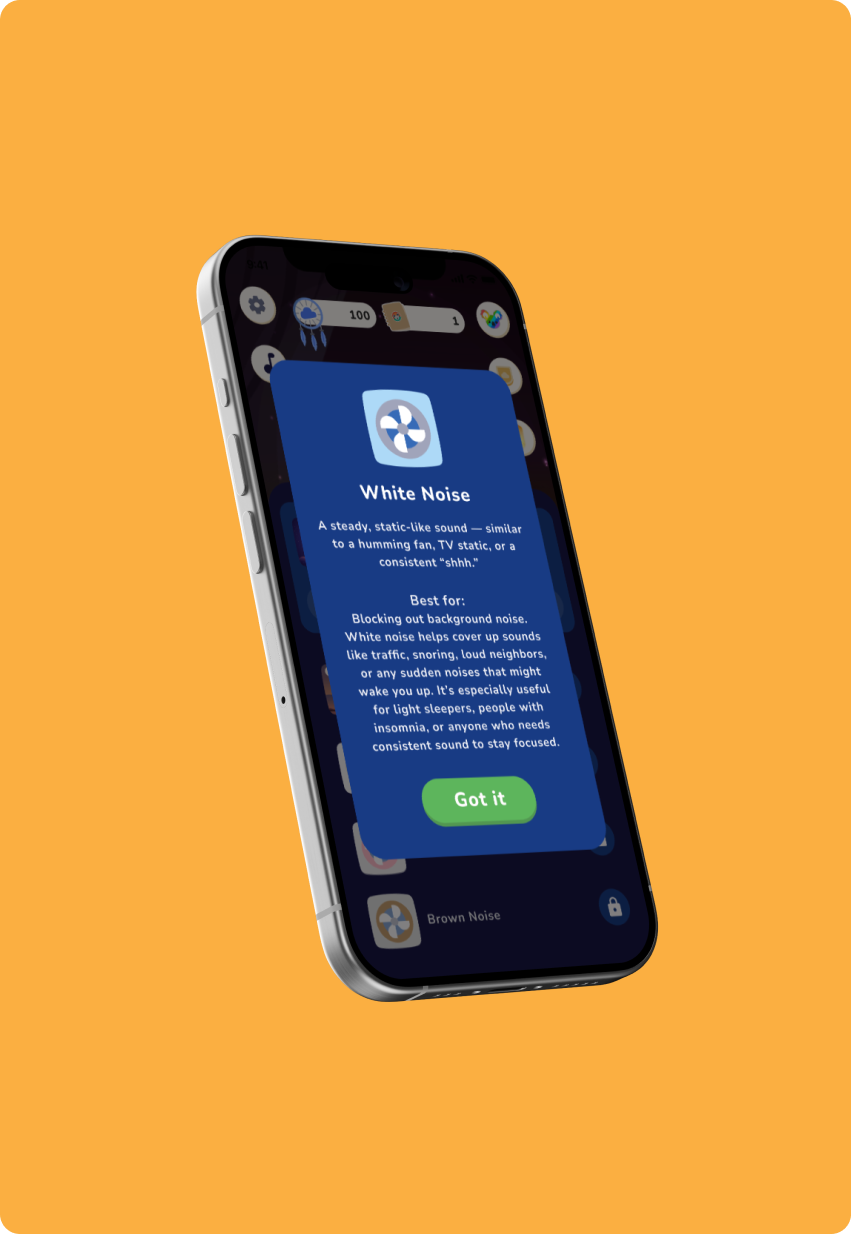
I led end-to-end: product strategy, UX, creative direction for the Rive animation of Kado sleeping, and the full sleep sounds UI design.
Research and Discovery
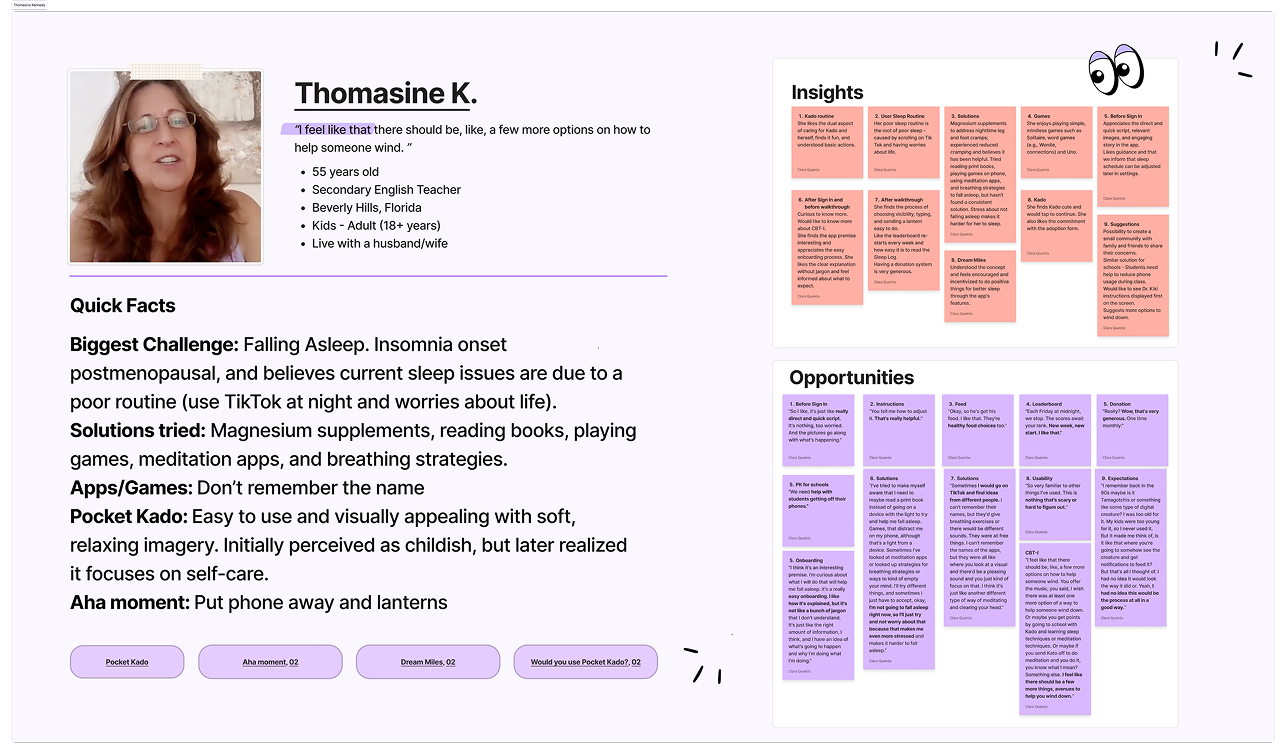
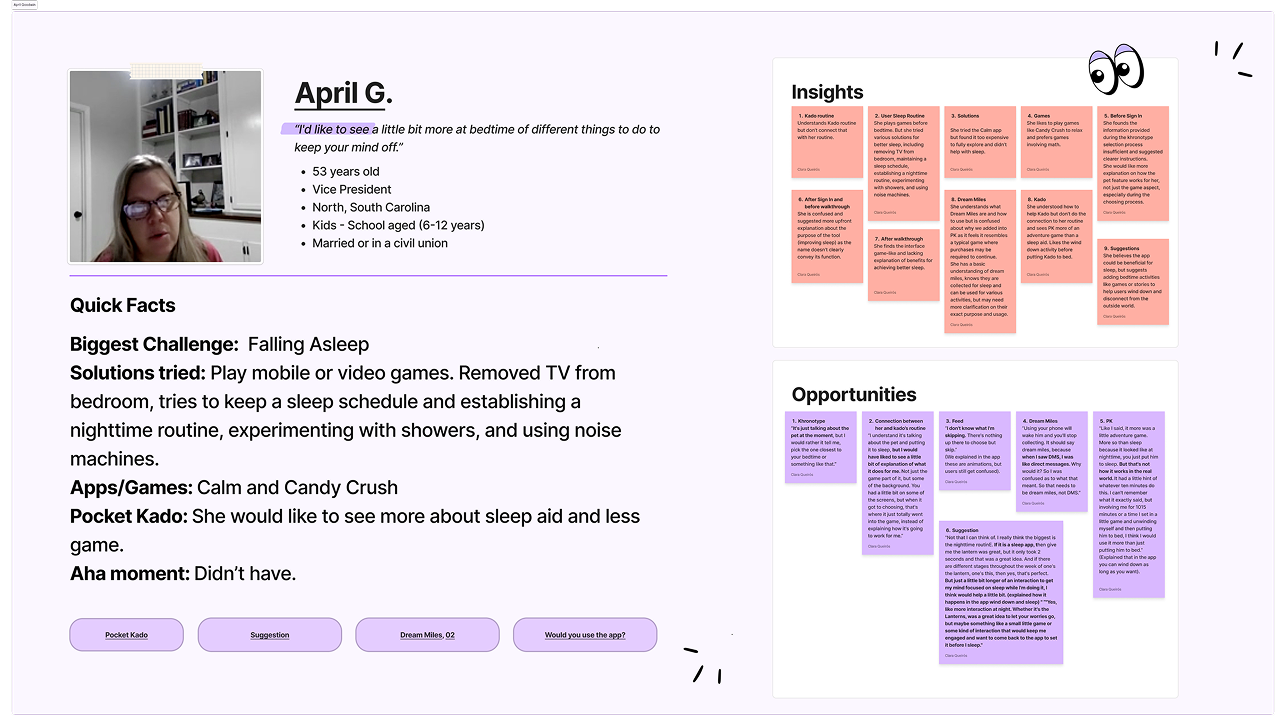
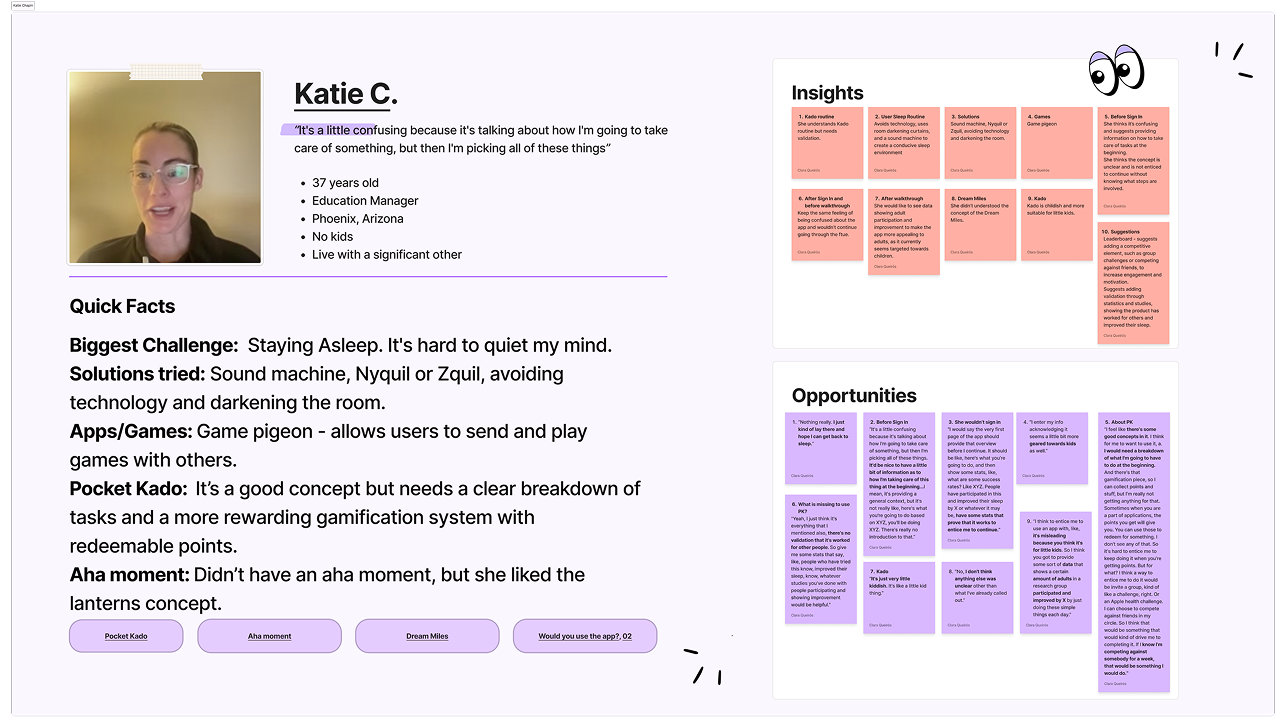
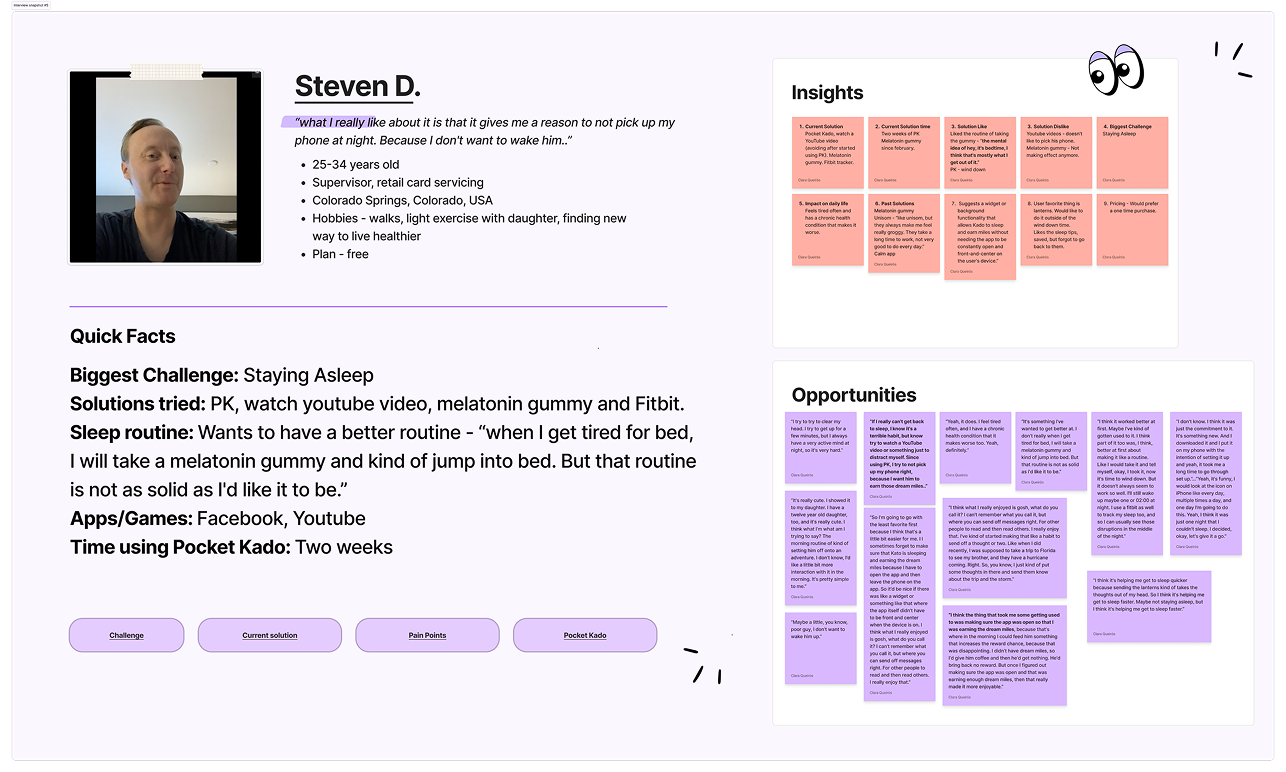
Scrolling in the middle of the night isn't for the entertainment. It's anxiety management.
Our users were predominantly people with anxiety who struggled to fall asleep. We noticed a pattern: instead of sleeping, they'd reach for their phones to scroll or put on familiar YouTube videos and Netflix shows – not to watch something new, but to distract themselves. It wasn't entertainment. It was coping.
At the same time, data from our first month of user acquisition showed that 33% of sleep sessions were being interrupted by users closing the app and breaking their Dream Miles streak. The average gap between a sleep interruption and restarting was only 2 minutes and 12 seconds, which told us users wanted to come back, but the motivation to stay wasn't strong enough to keep them from picking up their phone in the first place.
User research surfaced something else: people love watching a pet sleep. It makes them feel calm, peaceful, and safe. We drew inspiration from that instinct – the same reason people watch Animal Crossing characters go to bed, or can't stop staring at their dog dreaming. Kado sleeping wasn't just cute. It was behaviorally intentional.
User Personas
Dreaming Flow User Journey
Challenge and Solution
The paradox: build something engaging enough to make users stop engaging.
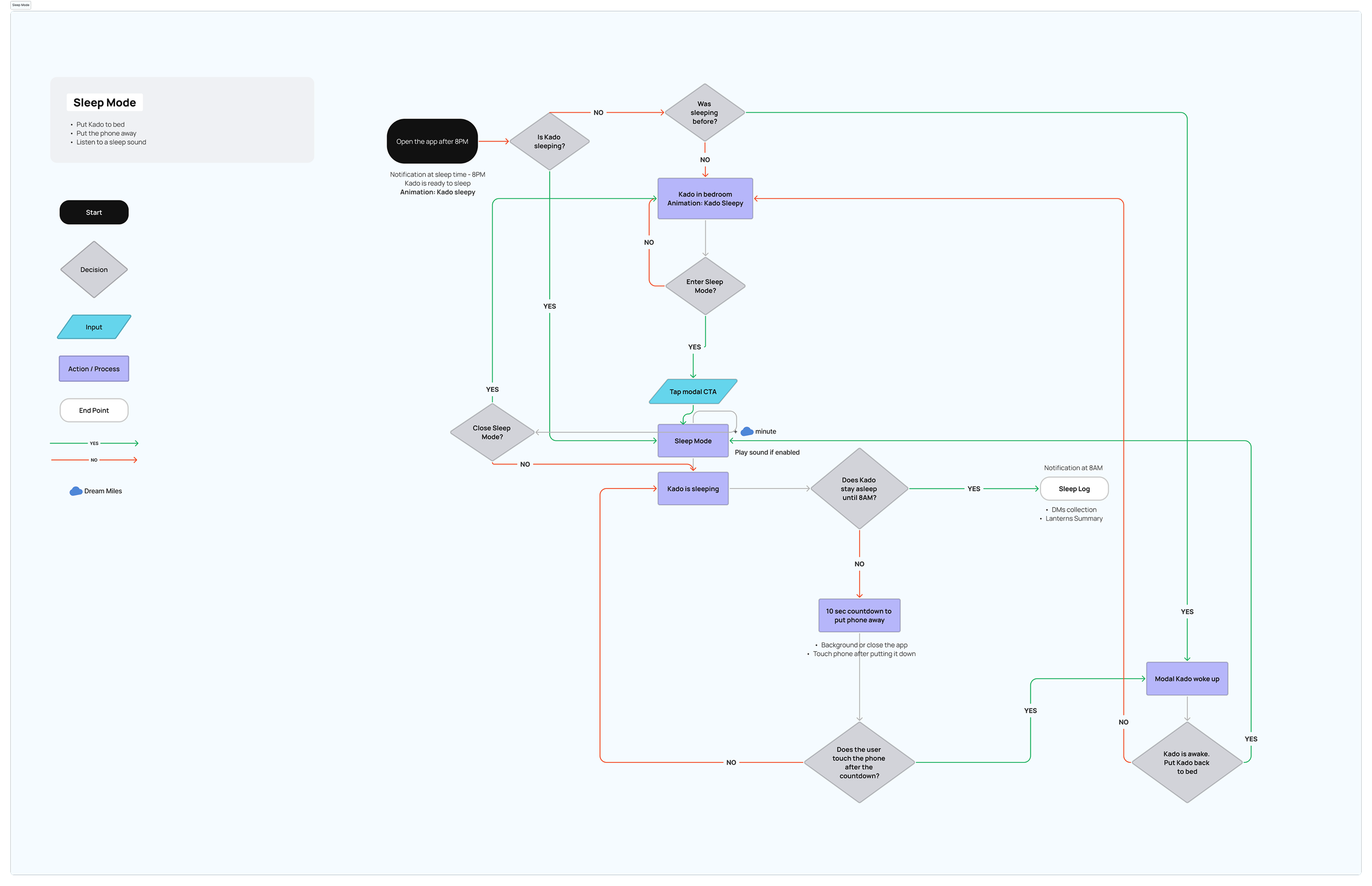
The core challenge was a design paradox: how do you build an engaging, immersive experience for a screen that users are supposed to put down?
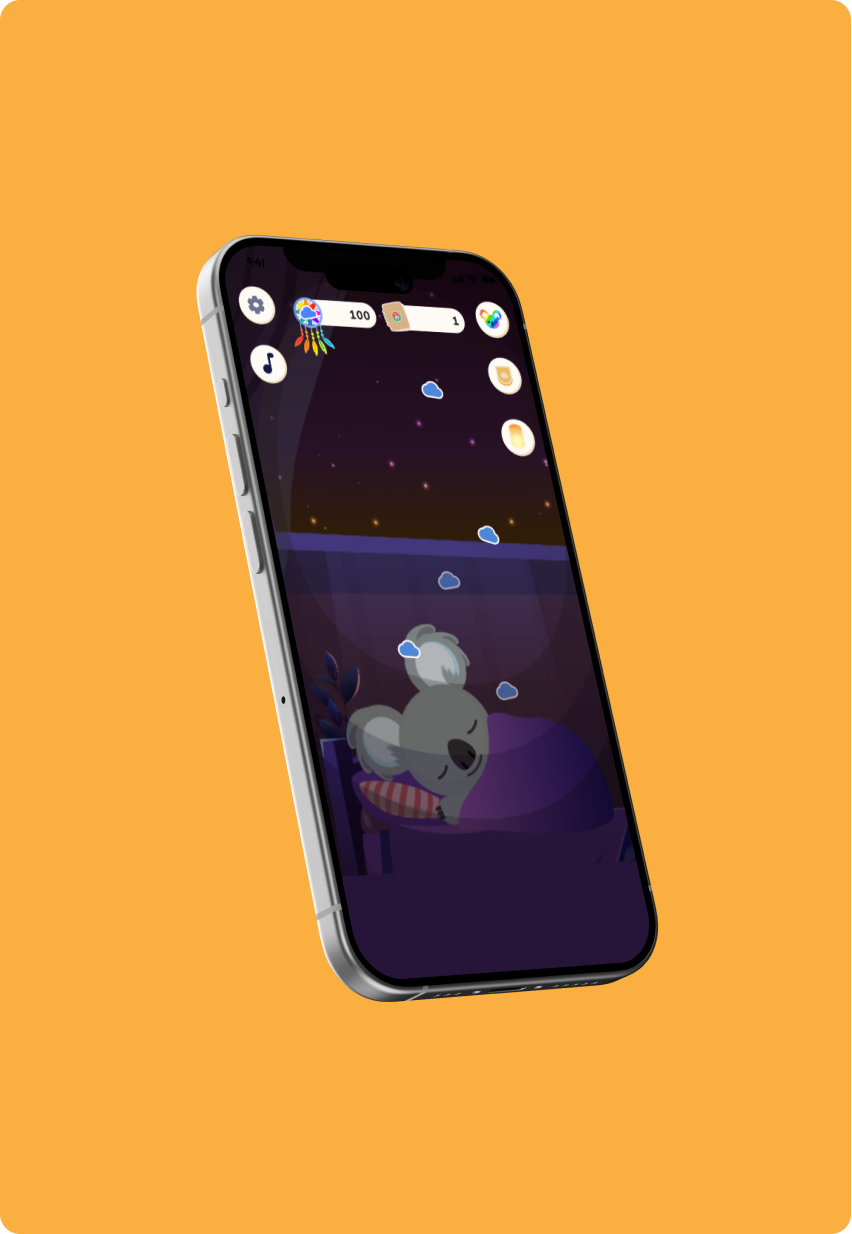
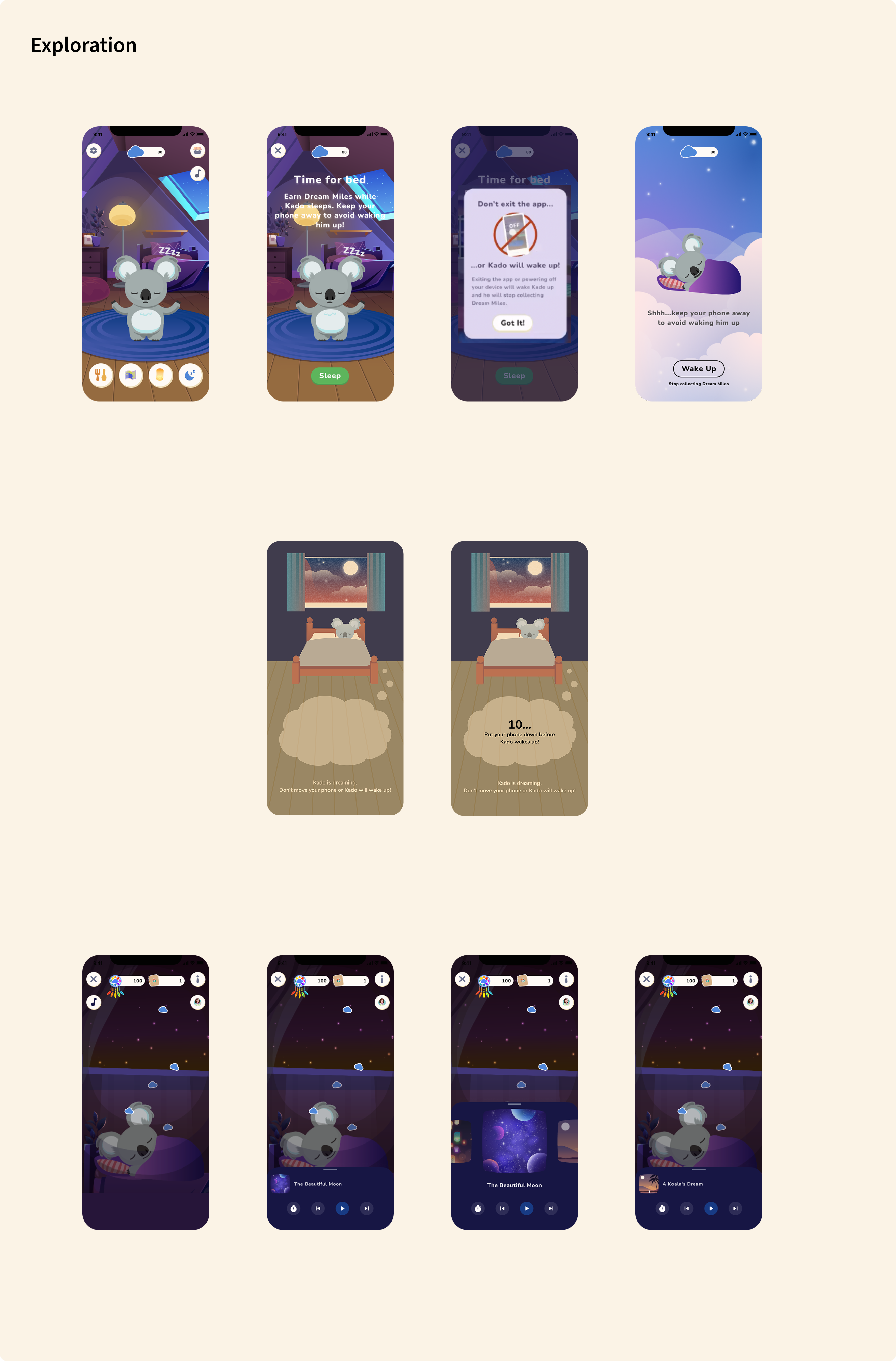
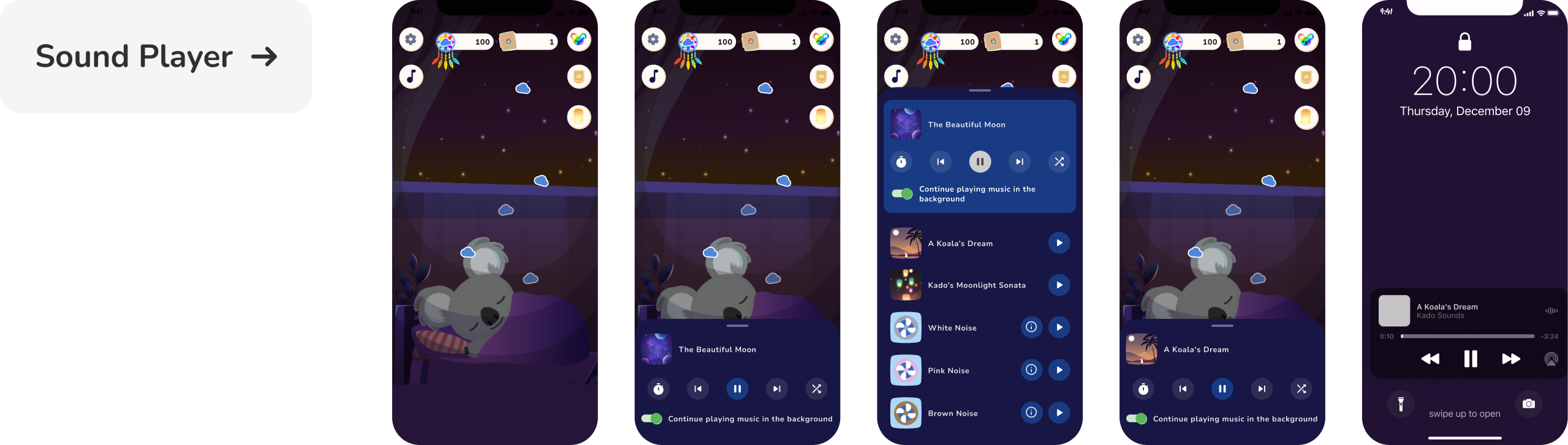
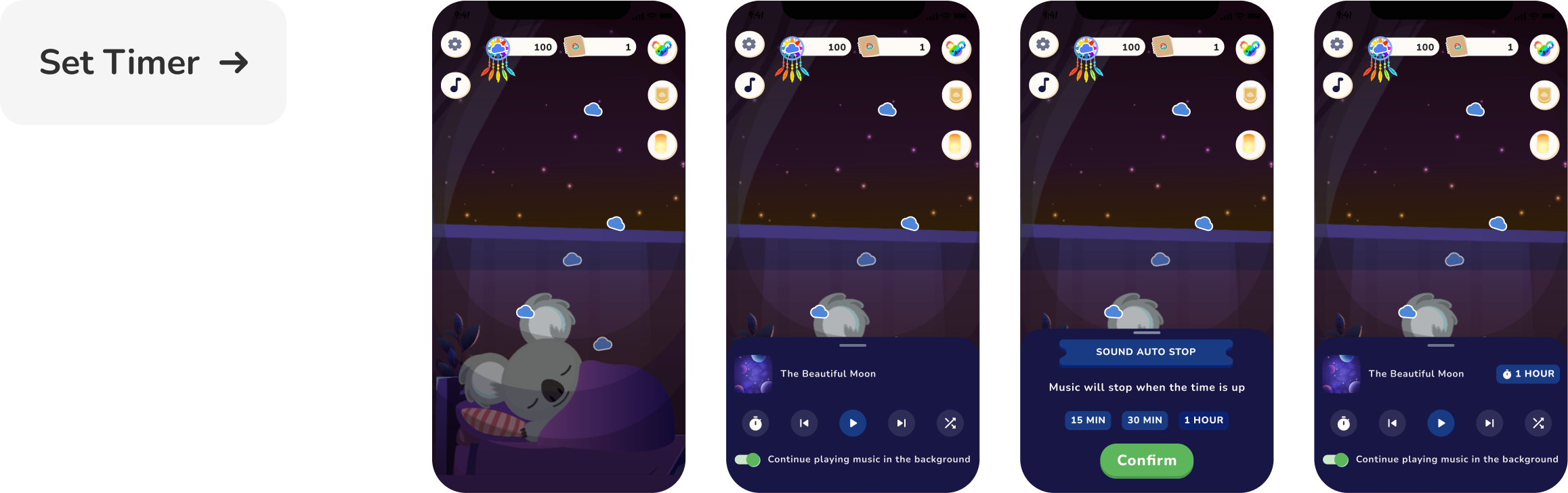
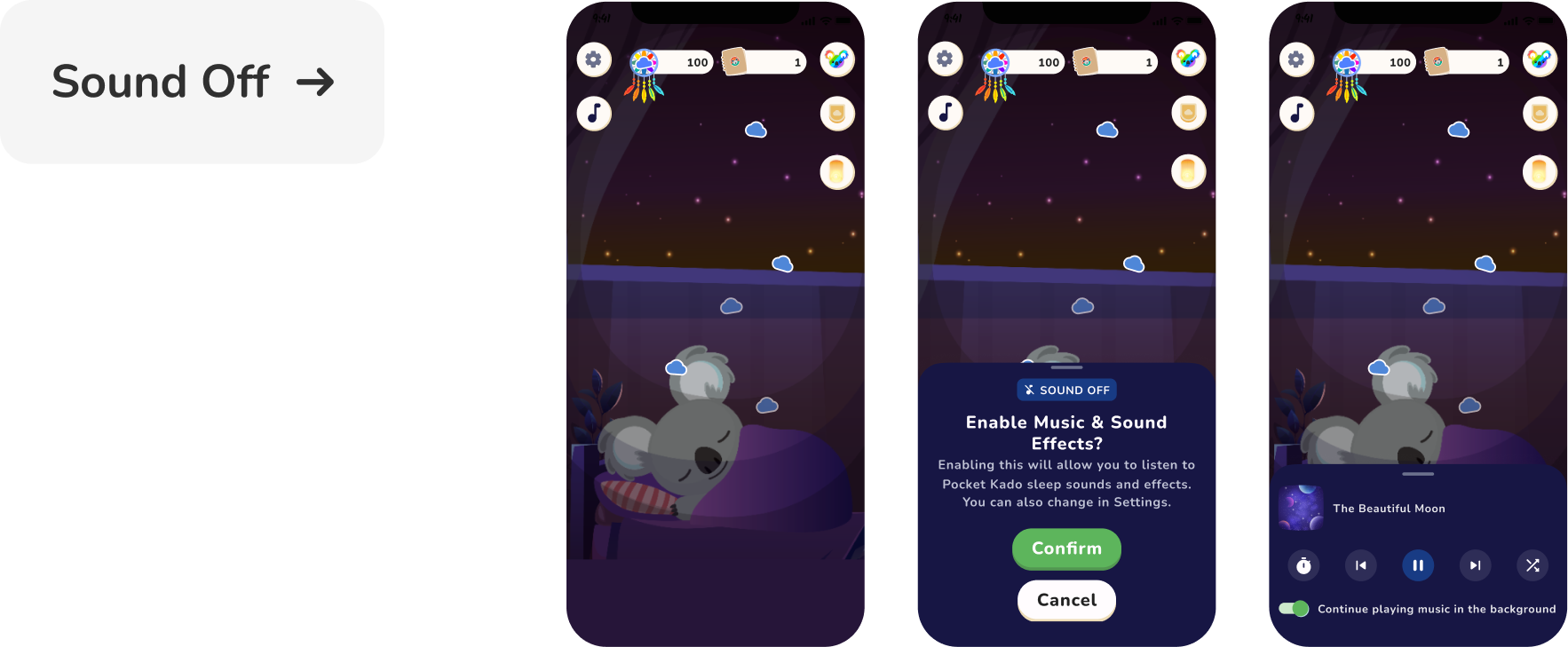
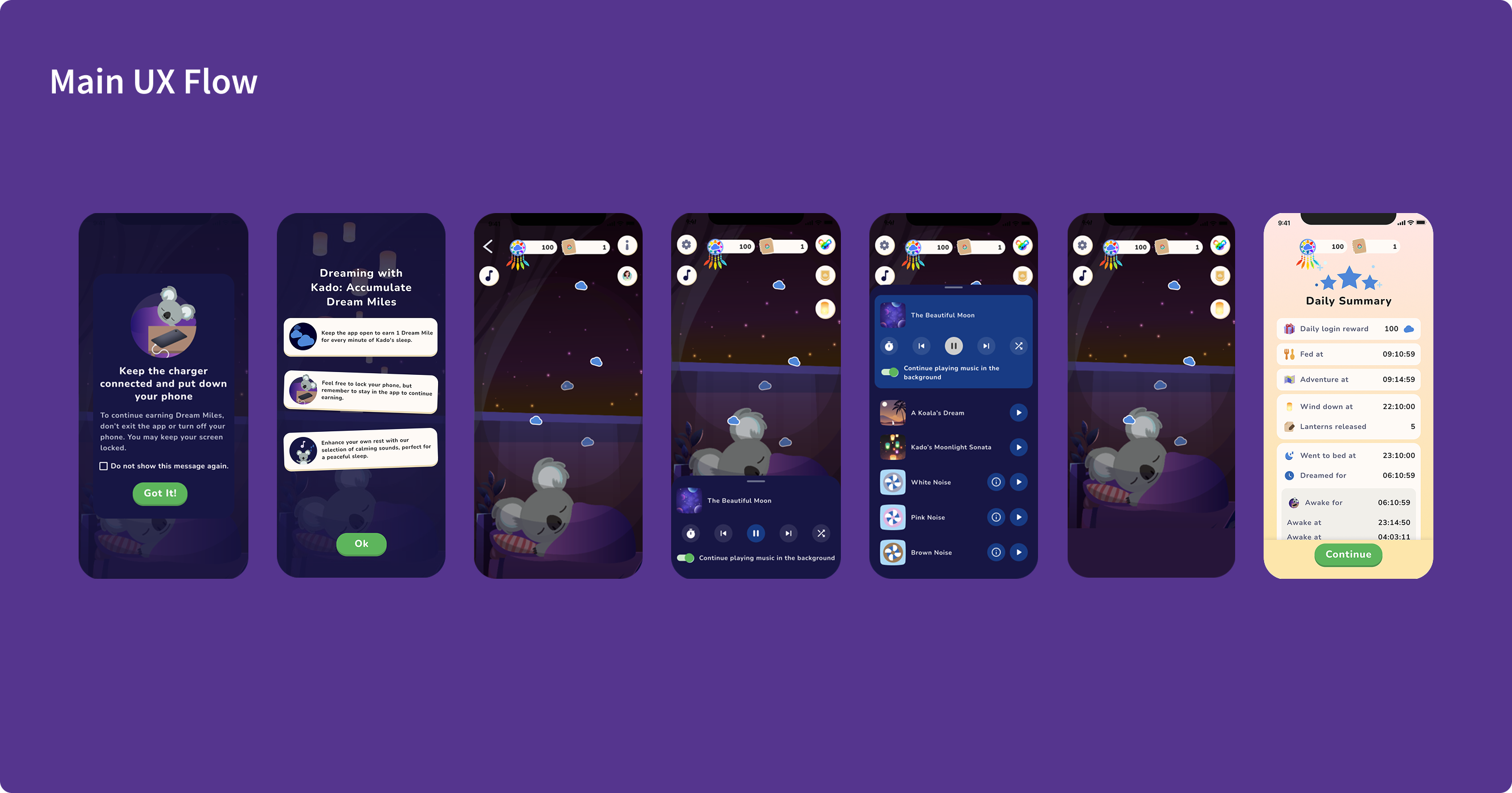
The answer was to front-load all the emotional payoff. Before users set down their phone, they needed to feel something – calm, safe, or rewarded. That meant the sleep entry experience had to do real work: a soothing animation of Kado tucking himself into bed, ambient sound options to ease the transition off other apps, floating lanterns where users could release their worries before sleep, and a Dream Miles counter that started accumulating the moment Sleep Mode began.
We also had to solve a significant technical challenge: keeping Dream Miles earning active while the app was backgrounded on both iOS and Android. Foreground/background audio and session logic behaved differently across platforms, requiring close collaboration with engineering to ensure the reward mechanic worked reliably regardless of how a user left the screen and put down their phone.
To reduce decision fatigue at the end of the day, when cognitive load is highest, we stripped out every unnecessary tap. Users shouldn't have to think. They should just feel ready for sleep.
Implementation
From design direction to engineering sprint – owning the full product development process.
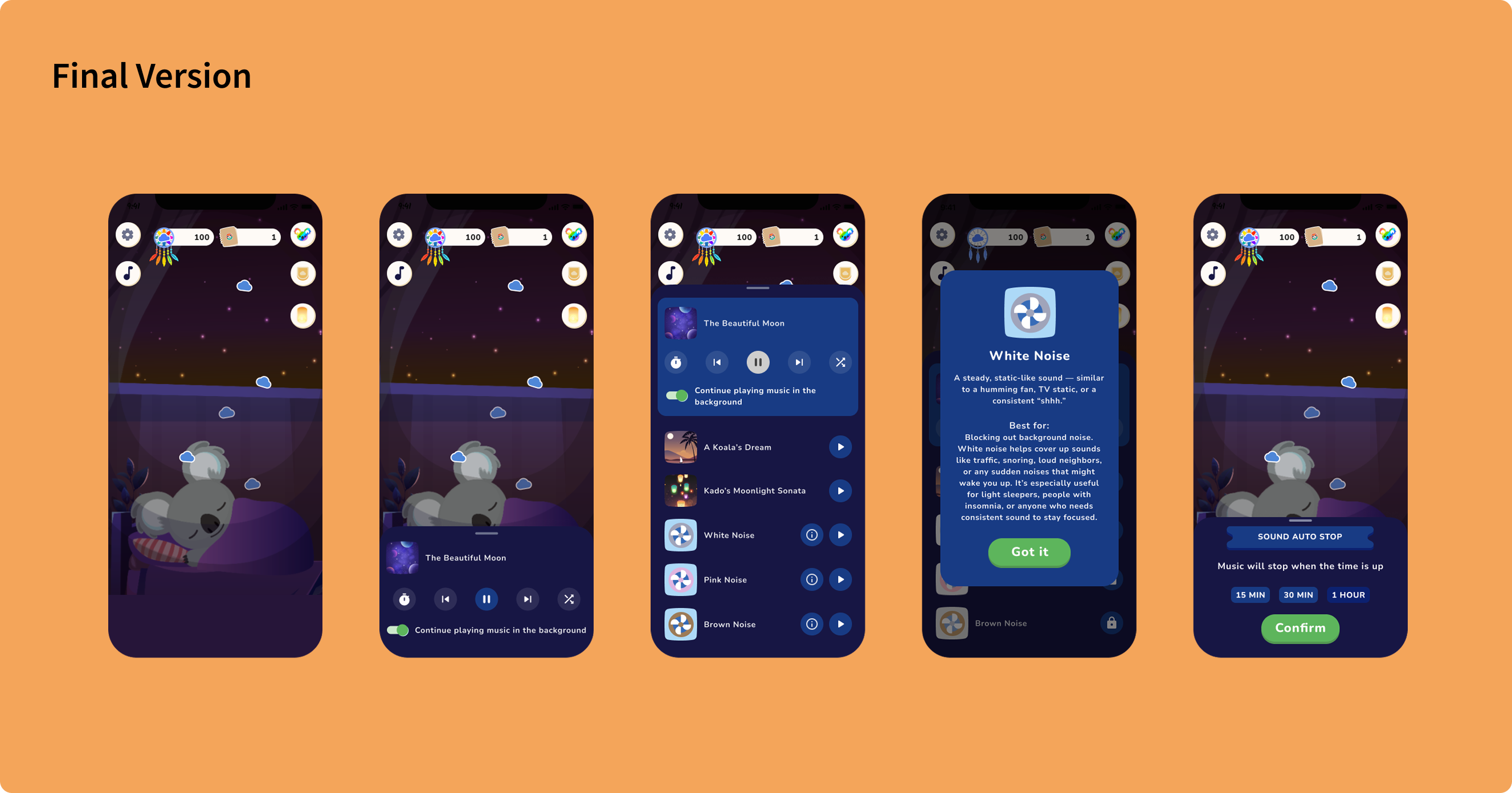
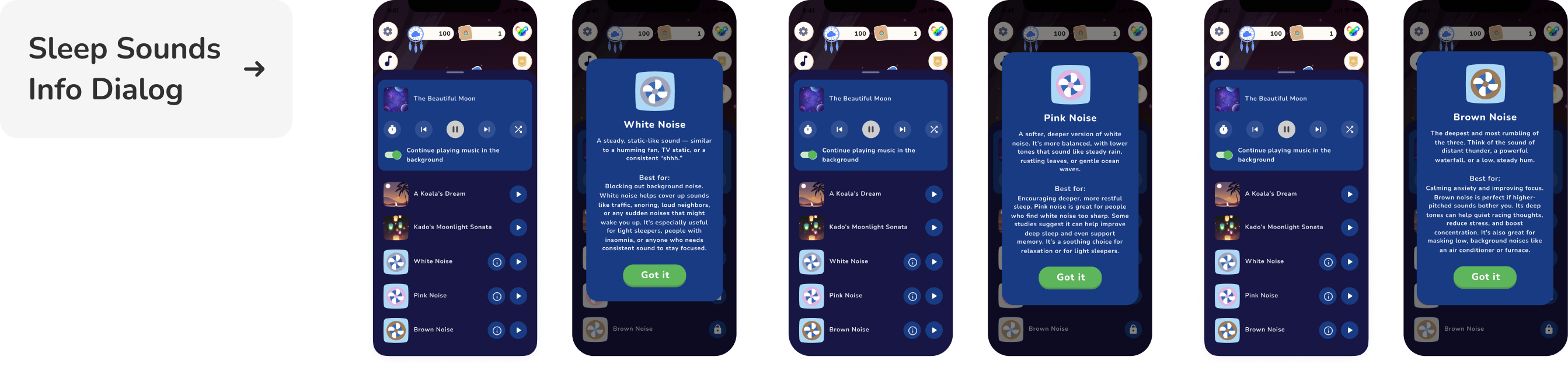
I designed the full Sleep Sounds UI and led the creative direction for the immersive sleep environment. The visual world drew from references like the underwater world of MapleStory and the quiet stillness of a Miyazaki scene – another world that feels safe to drift into. Floating lanterns, a deep night sky, and Kado sleeping peacefully in his bed, were all designed to signal: it's okay to let go now.
I worked with our Rive animator, Liuba, to create the animation of Kado going to sleep, which is a key moment in the experience. It was a short sequence where he tucks himself into his blanket, still half-awake, before drifting off. It was the emotional anchor of the whole feature.
For the HUD, I worked with our UI/UX designer, Clara, to design a live Dream Miles counter that visually accumulated throughout the night, so users who checked their phone at night got a satisfying confirmation that staying asleep was paying off – all without feeling punished for looking. We had Dream Mile clouds gracefully floating up into the HUD, while the counter incremented to signal active collection.
We also built in a post-sleep congratulations screen that surfaced how many Dream Miles were collected, creating a morning reward moment tied directly to sleep behavior.
Results and Impact
The data confirmed what the interviews told us: people needed this.
Post-launch Amplitude analysis tracked over the first 21 days and returned results that validated the core design hypotheses – users weren't just sleeping better, they were coming back.
65%
of sleep sessions completed through to the next morning which means the majority of users were sleeping through without interrupting Kado.
1.55 → 0.44
Sleep interruptions dropped significantly over time: users in days 1–7 averaged 1.55 interruptions per night; by days 15–21, that fell to 0.44
↑ DM collection
Dream Miles earned showed a positive correlation with in-app purchases the following day (r = 0.12), validating the currency loop as a meaningful engagement driver.
Users described the experience as making them feel comfortable, cozy, and safe – the exact emotional state we designed for.
“It makes me feel comfortable… you feel like you're letting your problems fly away.”
“I really like it a lot. It makes me feel very comfortable and cozy and safe.”
This feature had no direct market equivalent at launch. Sleep apps offered white noise. Habit apps tracked behavior. Pocket Kado was the first to gamify staying off your phone while turning the act of sleeping into something users genuinely looked forward to.